
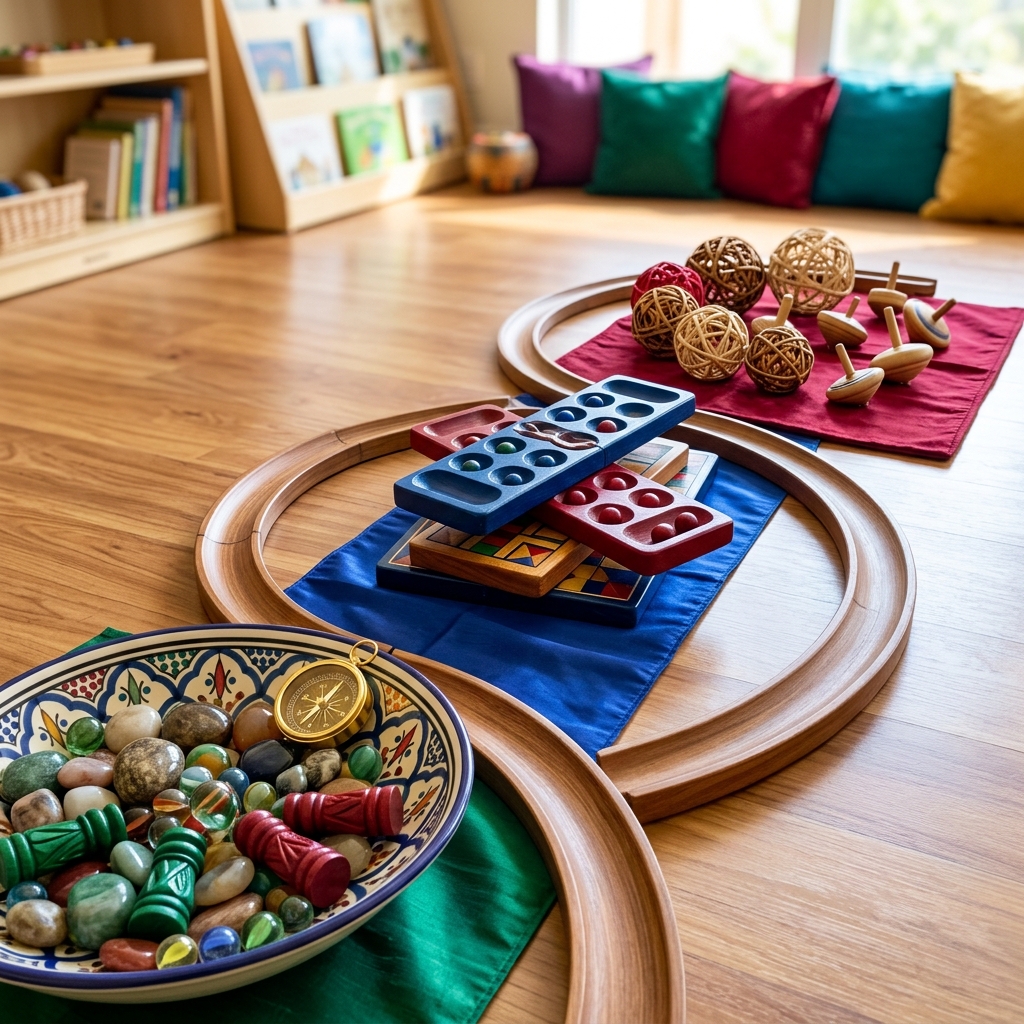
Play Together, Learn Together: Traditional Games Around the World
Lav dette projekt med din klasse
Hvad handler dette projekt om?
- Aldersgruppe
- 6-8
- Projektets varighed
- 4 uger
Læringsmål
Kompetencer der udvikles
Projektaktiviteter
Welcome to Our Global Classroom
Teacher introduces the Cultural Exchange project, explaining that students will discover traditional games from children around the world, play them together, and share their own games with international peers. Clarify how students will work in teams, interact with partner classrooms, and celebrate cultural diversity through play.
Meet Our Global Friends
Partner classes introduce themselves through short creative videos (1-2 minutes each) showing students waving, sharing their names, and showing one favorite game or toy from their country. Classes watch videos and create a collaborative digital mural or poster with photos and names of all students, establishing initial connections before diving into games.
What Games Do We Play?
Guide students to brainstorm and discuss the driving question: "What games do children play in different countries, and what do these games tell us about how they live?" Students share games they know, vote on which ones they are most curious about, and create a visual list of questions they want to ask their international peers about games and play.
Play and Learn Together
Each class presents their favorite traditional games to their international partners through a live virtual meeting or recorded video presentations. Students demonstrate how to play each game, explain its cultural significance, and answer questions from peers. After presentations, both classes play one game from each country together (adapted for remote play if needed), discussing similarities and differences in how children play around the world.
What Did We Learn?
Students reflect on the project through guided discussion and simple activities: drawing their favorite game learned, sharing one thing they discovered about another culture, and discussing how games connect people across countries. Create a collaborative reflection mural where each student adds a drawing, sticker, or written sentence answering "What did this project teach me about the world?" Exchange thank you messages with international peers via video or written notes.
Projekttidslinje
Launch the Global Games Project
Teacher introduces Activity 1 by explaining that students will discover traditional games from children around the world, play them together, and share their own games with international peers.
Students explore a visual world map showing the partner countries and discuss their excitement about connecting with new friends through games and play.
Teacher clarifies how students will work in teams, interact with partner classrooms using the Class2Class platform, and celebrate cultural diversity through play activities.
Explore the Driving Question
Students brainstorm and discuss games they know, sharing examples from their own lives and families (e.g., tag, hopscotch, marble games, ball games).
Teams create a visual list of questions they want to ask their international partners about games and play (e.g., 'How do you play that game?', 'Why is it important in your country?', 'Can we play it together?').
Prepare Our Traditional Games
Students work in small teams to select one or two favorite traditional games from their own country or region to share with international peers.
Each team practices their chosen game and documents how to play it by drawing simple step-by-step instructions or creating a short how-to guide with illustrations.
Teams discuss the cultural significance of their games, answering questions like: 'When do children play this game?', 'What makes this game special in our culture?', 'What do we learn from playing it?'
Students create simple visual aids (posters, drawings, or diagrams) showing the rules and setup of their traditional games.
Play and Learn Together
Students present their favorite traditional games to international partners through a live virtual meeting or recorded video presentations posted on the online board Padlet.
Each country demonstrates how to play their game, explains its cultural significance, and answers questions from peers in real-time or via asynchronous responses in the group chat.
Students watch presentations from partner classrooms and learn the rules of games from other countries, taking notes or drawing pictures of the games they find most interesting.
Reflect and Celebrate Our Learning
Students reflect on the project through guided discussion, sharing one game they learned, and discussing what they discovered about another culture.
Each student draws their favorite game learned from international peers and writes or dictates one sentence about why they enjoyed it.
Students exchange thank you messages with international peers via recorded video messages or written notes posted on the Padlet, expressing gratitude for the cultural exchange.
Hvad deltagerne siger
Christin Kim
 Sydkorea
Jhansi Ravikumar
 Indien