
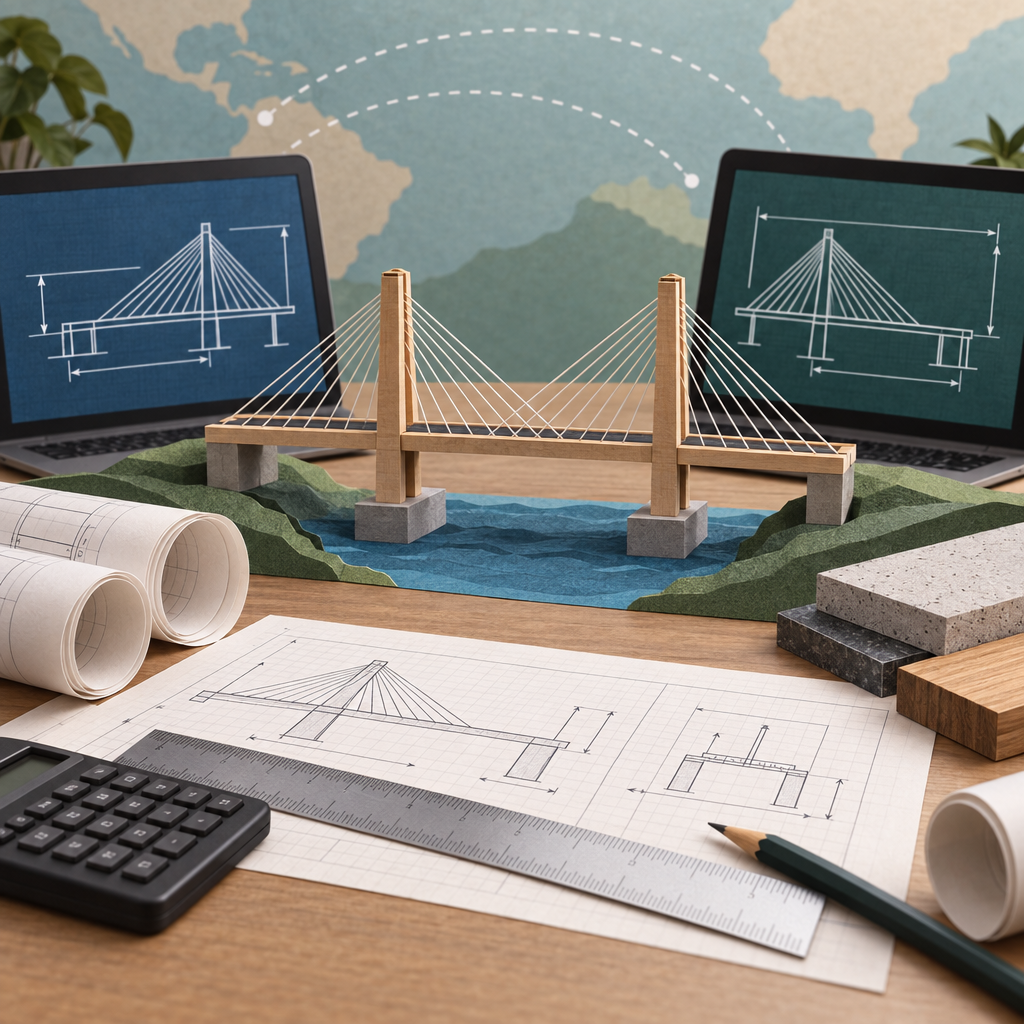
Engineering Unit Challenge Project
어떤 프로젝트인가요?
Student teams design a practical engineering scenario (bridge load, water system, or structural material specification) that requires precise SI unit conversions and dimensional analysis, then create a detailed proposal with calculations, assumptions...
- 학생 연령
- 18세 이상
- 진행 기간
- 3 주
- 시작 월
- 10월 2026
이 프로젝트는 다음 국제 목표에 기여합니다
이 프로젝트는 다음 아동 권리를 알리고 지킵니다
학습 성과
Students will be able to engage in conversations on familiar topics with confidence
기르는 역량
프로젝트 활동
SI Units and Real-World Engineering: Getting Started
Students review SI unit prefixes, practice conversions using the provided problems, and discuss why precision matters in engineering. Introduce the partner class and the challenge: each team will design a real engineering scenario requiring unit conversions and dimensional analysis.
Design Your Engineering Challenge Scenario
Student teams select a real engineering context (bridge load, water system, or material specification), define the problem with precise measurements and unit conversions, and create a detailed proposal including calculations, assumptions, and safety margins. Teams document their scenario and reasoning clearly so a partner class can solve it.
Live Problem Exchange and Collaborative Problem-Solving
Teams join a video call with the partner class to present their engineering scenarios, ask clarifying questions, and receive their peer team's challenge to solve. After the call, teams work to solve the partner scenario using dimensional analysis and SI conversions, then prepare written feedback on the engineering soundness of the partner's design.
Refine, Solve, and Document Solutions
Teams complete the partner class's engineering challenge, showing all conversion steps and dimensional analysis. Teams also review the feedback they received on their own scenario and refine their proposal if needed. Both the solution and the refined proposal are compiled into a clear, professional document.
Showcase and Reflect on Global Engineering Collaboration
Teams present their original engineering scenario, the partner's solution, and their own solution to the partner's challenge in a final showcase. Students reflect on how working with an international team improved their problem-solving and communication skills, and discuss what they learned about engineering precision and intercultural collaboration.