
Zum Inhalt springen
Zurück
康

康介 浜島 hat das Projekt "What Should You Try in Japan?" in Class2Class.org erstellt

Teilnahme anfragen
Inaktiv
Öffentlich
Mit einer anderen Klasse zusammenarbeiten

What Should You Try in Japan?

Worum geht es bei diesem Projekt?

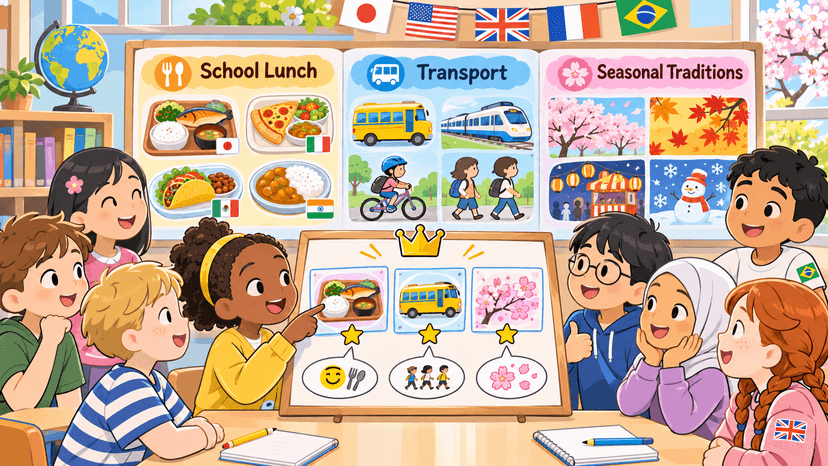
Students research and compare daily-life experiences, such as school lunches, transport, or seasonal traditions, with those of partner classes. They then choose the top experiences they think visiting children should try and explain why.
Alter der Schüler:innen
9-12 Jahre
Projektlaufzeit
3 Wochen
Startmonat
Dezember 2026

Lernergebnisse

Students will be able to identify and describe daily-life experiences in Japan, such as school lunches, transport, and seasonal traditions, in comparison with their partner class.
Erinnern / Verstehen
Students will be able to apply a shared comparison chart with their partner class to organize information about school lunches, transport, and seasonal traditions.
Anwenden
Students will be able to compare and contrast their own daily-life experiences with those of partner classes, identifying similarities and differences through collaborative research.
Analysieren
Students will be able to evaluate and select the top experiences that visiting children should try in Japan, explaining their reasons with evidence gathered from teamwork with their partner class.
Bewerten

Zu entwickelnde Kompetenzen

Interkulturelle Kommunikation
Zusammenarbeit & Teamarbeit
Kritisches Denken & Problemlösung

Projektaktivitäten

1

Kick-off: Share Daily Life in Our Two Countries

Students meet their partner class by video and share what a normal school day looks like at home. They notice first similarities and differences in lunches, getting to school, and seasonal traditions.

Dauer: 30 Minuten
2

Research and Compare Daily-Life Experiences

In small groups, students research school lunches, transport, and seasonal traditions in Japan and in the partner country. They fill in a shared comparison chart with their partner class, noting similarities and differences.

Dauer: 120 Minuten
Durchführung: Vergleichstabelle
3

Choose the Top Experiences to Try

Students discuss the comparison findings and pick the experiences they think visiting children should try most. They write down the reasons for each choice, using evidence from the comparison and their partner class.

Dauer: 90 Minuten
4

Share Our Top Experiences with the Partner Class

Each group presents its chosen experiences and reasons to the partner class and answers questions. Students then reflect on what changed in their choices after hearing their partners' views.

Dauer: 60 Minuten
Durchführung: Ausstellung oder Showcase