Simin yildiz hat das Projekt "Take What You Need: Designing a Zero-Waste School Campaign" in Class2Class.org erstellt
Teilnahme anfragen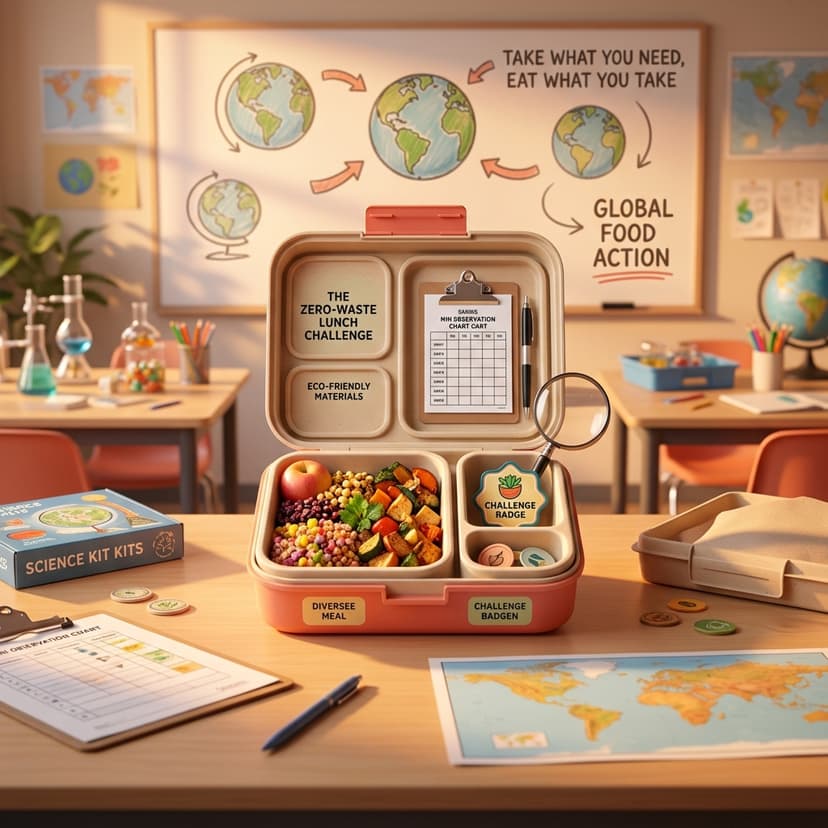
Take What You Need: Designing a Zero-Waste School Campaign
Worum geht es bei diesem Projekt?
- Alter der Schüler:innen
- 9-12 Jahre
- Projektlaufzeit
- 6 Wochen
- Startmonat
- November 2026
Dieses Projekt trägt zu folgenden globalen Zielen bei
Dieses Projekt fördert und schützt die Rechte dieser Kinder
Lernergebnisse
Zu entwickelnde Kompetenzen


Projektaktivitäten
Meet Your Partner Class and Explore Food Waste
Students introduce themselves and their schools through short videos or digital profile cards, then watch their partner class introduction. Together, they discuss why food gets wasted at lunch and explore how SDG 12 connects to their daily choices.
Investigate Food Waste at Your School
Over 3–5 days, students observe and record what food is left uneaten during lunch using simple charts, photos, or tallies. They note which foods are wasted most, why students leave food behind, and whether portions are too large or unappealing.
Compare Findings with Your Partner Class and Design Solutions
Each class presents its data as a chart or infographic. Students compare what they found, spot similarities and differences between schools, and work in mixed teams (local and international) to choose one practical solution they can both test, such as smaller portions, a sharing station, or a pledge campaign.
Create and Launch Your Zero-Waste Campaign
Students design joint campaign materials in English, such as posters, slogans, videos, or pledges, and put them up in both schools. During the one-week challenge, they repeat their observations to see if food waste drops. They record before-and-after numbers and take photos of their campaign in action.
Showcase Your Results and Reflect on Impact
Partner classes compare their before-and-after results and discuss what worked best. Students create a collaborative digital exhibition or presentation showing their research, campaign materials, results, and what they learned about food waste and working with their international partners.