
What Can Kids Change?
Hvad handler dette projekt om?
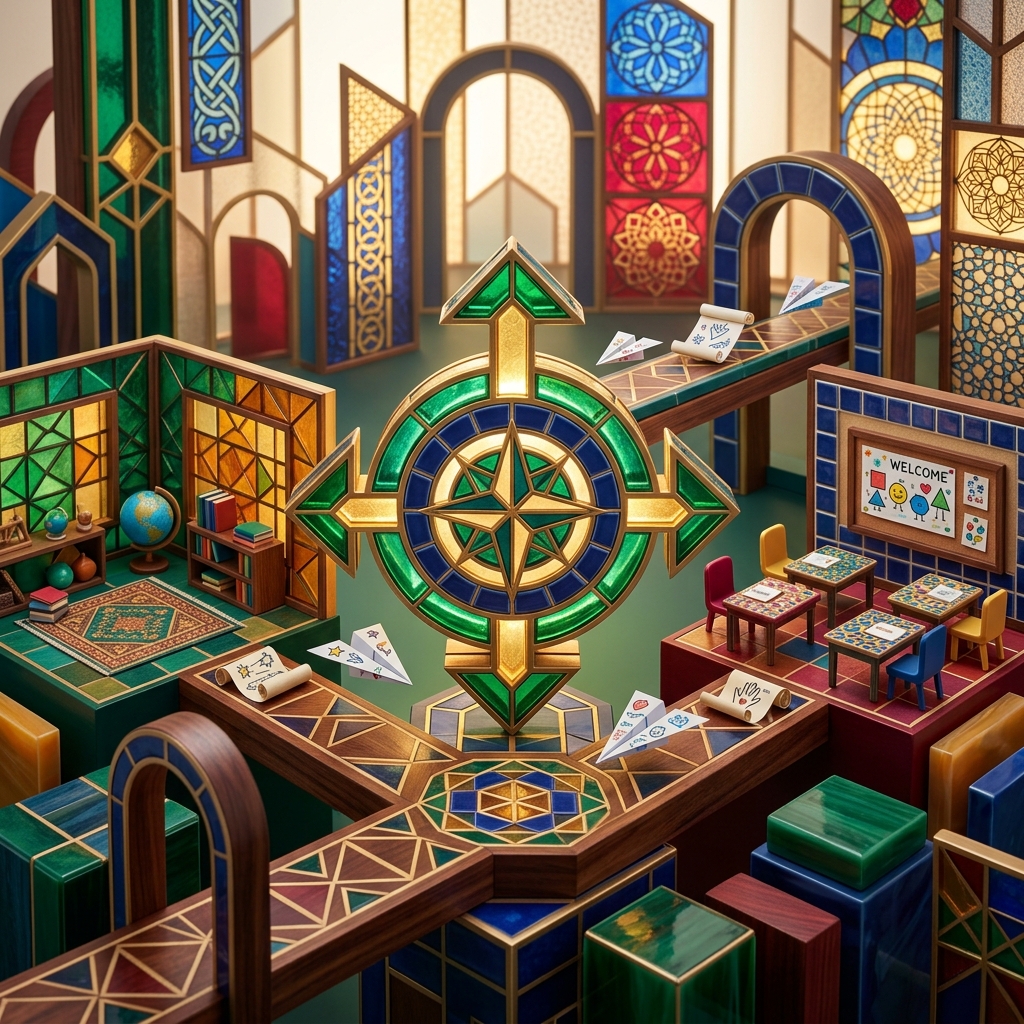
Each class chooses one concrete change they can make to feel more welcoming, such as creating a welcome poster, rearranging a reading space, or starting a daily greeting ritual. Students carry out their change, document it with photos or drawings, an...
- Elevernes alder
- 6-8 år, 9-12 år
- Projektets varighed
- 4 uger
- Startmåned
- Oktober 2026
Dette projekt bidrager til følgende globale mål
Læringsmål
Students will be able to identify and describe features that help people feel welcome and included in their classroom or school community.
Students will be able to demonstrate empathy by listening to and sharing ideas with peers and partner classrooms about creating a welcoming space through drawings, photos, or simple sentences.
Students will be able to compare and contrast how their class and a partner class help people feel welcome and included.
Students will be able to evaluate possible changes and choose one small action that could make their classroom or school community more welcoming and inclusive.
Students will be able to design and carry out one small change, document what they did, and reflect on what they learned from their partner class and from taking action.
Kompetencer der udvikles
Projektaktiviteter
Notice: What Helps People Feel Welcome and Included?
Students explore their classroom or school community and identify things that help people feel welcome and included. They may notice signs, routines, languages, spaces, greetings, or ways students help one another. Students record one thing that already works well and one thing they think could be improved through a drawing, photo, or short sentence.
Connect: Learn from Our Partner Class
Students exchange drawings, photos, short writing, or videos with their partner class. They learn how students in another community create a welcoming and inclusive environment, then compare ideas using simple prompts such as “Same,” “Different,” and “New Idea.” Each class also sends a few student-generated questions to the partner class.
Decide: What Can Kids Change?
Students review what they noticed in their own community and what they learned from their partner class. In small groups, they brainstorm small changes students could realistically make. The class discusses the ideas and chooses one action based on questions such as: Who would this help? Is it something kids can do? How could it make our community more welcoming or inclusive?
Act, Share, and Reflect
Students work together to carry out their chosen action. They document the process with photos, drawings, short writing, or video, then share the result with their partner class. Students reflect on what changed, what they learned from the other class, and complete a simple statement such as “Kids can change ___ by ___.”