
Obi has created the project "Climate Change Waste Research Collaboration" in Class2Class.org
Request to join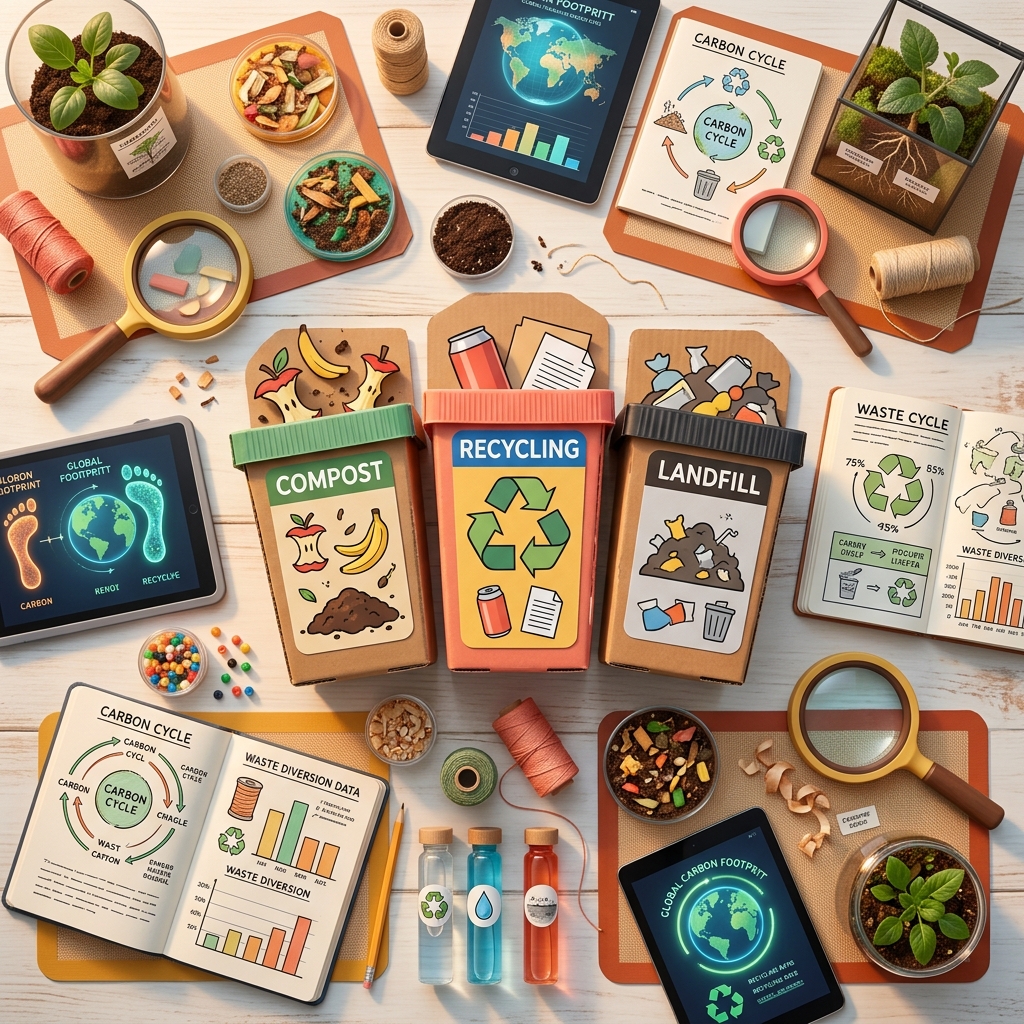
Climate Change Waste Research Collaboration
What is this project about?
Students research waste management systems and climate impact in their own region, then compare findings with partner schools internationally through shared research presentations and analysis. They investigate how waste contributes to climate change...
- Age of Students
- 13-15 years
- Project Duration
- 4 weeks
- Starting Month
- July 2026
- Language
- Engelsk
Learning Outcomes
Students will be able to identify and describe waste management practices in their local community and compare them with practices from partner classrooms in other countries.
Students will be able to demonstrate understanding of climate change impacts on waste management by applying digital tools to create visual representations of waste data collected collaboratively with international peers.
Students will be able to analyze and compare waste management solutions between their community and partner classrooms, examining how cultural differences and local contexts influence approaches to sustainability.
Students will be able to evaluate the effectiveness of different waste management strategies for addressing climate change, using critical thinking to assess which approaches best serve their community while considering global perspectives shared by international collaborators.
Skills to develop
Project Activities
Project Kickoff: Climate Change and Waste Management
Teacher presents the project purpose, explaining how waste management connects to climate change and why understanding global perspectives matters. Students learn about the international collaboration opportunity, explore the learning goals, and discuss initial curiosities about waste practices in their community and around the world.
Cultural Exchange: Introducing Our Community
Students create a short creative introduction of their community's waste management practices and environmental awareness. Partner classes exchange introductions via video, digital mural, or recorded messages to build initial connections and share their local context before diving into deeper exploration.
Framing Our Inquiry: The Driving Question
Class collaborates to develop a driving question that guides exploration: 'How do waste management practices in our community compare with those in other countries, and what can we learn from each other about addressing climate change?' Students brainstorm what they already know and what they want to discover from international peers using collaborative tools like Padlet or concept mapping.
Local Waste Investigation
Students conduct local research through interviews with family members, community workers, or local environmental organizations. They observe waste management practices in their neighborhood, collect photos, document stories, and gather data about how waste is handled. Students organize findings into themes and prepare materials to share with partner classes.
Creating Comparative Waste Data Visualizations
Working in international teams, students transform their local research into visual representations using digital tools like Canva, Infogram, or Google Sheets. They create infographics, charts, or interactive presentations comparing waste management practices, climate impacts, and sustainability approaches between their community and partner classrooms. Teams collaborate asynchronously or via video call to integrate diverse perspectives.
Global Waste Management Showcase
Students present their comparative visualizations and findings to the school community through a local exhibition or digital gallery. They prepare talking points explaining what they learned from international peers about different waste management strategies and how cultural and local contexts shape sustainability approaches. Final products are shared on the Project Board for both classes to access.
Reflecting on Global Learning
Students engage in individual and group reflection using guiding questions: 'What surprised you about waste management practices in other countries?' 'How did learning from international peers change your thinking about climate change?' 'What is one action you could take in your community based on what you learned?' Students complete reflection journals, participate in peer feedback, and exchange thank you messages with partner classes.
Project Timeline
Step 1
Students review the project purpose and timeline together, exploring how waste management connects to climate change and why understanding global perspectives matters
Teacher presents the international collaboration opportunity and students discuss initial curiosities about waste practices in their community and around the world
Each student identifies one question they want to explore about waste management in their community or globally
Step 2
Students create a short creative introduction of their community's waste management practices and environmental awareness using video, digital mural, or recorded messages
Each class posts their introductions on the project board for the partner classroom to view and engage with
Students watch partner introductions and write down 3 observations or questions about waste management practices they noticed in the other community
Students participate in an asynchronous or live exchange where they share their observations and ask clarifying questions about their partner classroom's waste practices
Teams collaborate to create a visual comparison map using Padlet showing initial similarities and differences in how both communities think about waste and the environment
Step 3
Class collaborates to develop a driving question that guides exploration, working together to refine the question: 'How do waste management practices in our community compare with those in other countries, and what can we learn from each other about addressing climate change?'
Students brainstorm what they already know about waste management using a concept map or Padlet, organizing ideas into categories like household waste, recycling, composting, and environmental impact
Students list what they want to discover from international peers, identifying specific aspects of waste management they are curious about (e.g., how other countries handle plastic waste, what recycling systems exist elsewhere, cultural attitudes toward waste)
Guide students to connect their driving question to the Sustainable Development Goals, specifically SDG 12 (Responsible Consumption and Production) and SDG 13 (Climate Action)
Step 4
Students conduct local research through interviews with family members, community workers, or local environmental organizations, asking questions about how waste is collected, sorted, and disposed of in their neighborhood
Students observe and document waste management practices in their community by taking photos, sketching diagrams, and recording observations at home, school, or local facilities (e.g., recycling centers, landfills, composting sites)
Each student collects personal stories or data about waste habits, such as how much waste their family produces weekly, what items they recycle or compost, and any challenges they face with waste management
Students organize their findings into themes (e.g., types of waste, recycling practices, environmental awareness, barriers to sustainability) using a shared Google Doc or spreadsheet
Students prepare materials to share with partner classes by selecting the most compelling photos, stories, and data points that represent their community's waste management practices and environmental challenges
Step 5
Working in international teams (assigned by teacher or self-selected), students access local research materials from both their community and their partner classroom using the Class2Class platform
Teams transform their local research into visual representations using digital tools like Canva, Infogram, or Google Sheets, creating infographics comparing waste types, recycling rates, or environmental impacts between communities
Students create charts or interactive presentations showing how waste management practices differ between their community and partner classrooms, highlighting factors like technology, cultural attitudes, and available resources
Teams collaborate asynchronously or via scheduled video calls to integrate diverse perspectives, with each member contributing insights from their local context and asking questions about the partner classroom's practices
Teams use the Class2Class group chat feature to communicate directly, share drafts, provide feedback, and coordinate their collaborative work throughout the production process
Students finalize their comparative visualizations and prepare talking points explaining what they learned from international peers about different waste management strategies
Step 6
Students present their comparative visualizations and findings to the school community through a local exhibition or digital gallery, explaining the waste management practices they researched and what surprised them about their partner classroom's approach
Each student or team prepares talking points that explain how cultural and local contexts shape sustainability approaches, discussing factors like climate, economic resources, government policies, and community values
Students share their final products on the project board for both classes to access, ensuring that international peers can view and learn from their work
Guide students to present their findings in a way that celebrates diversity, showing respect for different approaches to waste management while identifying common challenges and shared solutions
Students engage in peer feedback by commenting on other teams' visualizations, asking questions about their findings, and sharing appreciation for what they learned from the international collaboration
Step 7
Students engage in individual reflection by responding to guiding questions in their journals: 'What surprised you about waste management practices in other countries?', 'How did learning from international peers change your thinking about climate change?', and 'What is one action you could take in your community based on what you learned?'
Students participate in small group discussions where they share their reflections, listen to peers' insights, and discuss how the international collaboration deepened their understanding of global waste challenges
Students complete a peer feedback activity by reviewing at least two other teams' work and writing constructive comments that acknowledge what they learned from their international partners' perspectives
Students exchange thank you messages with their partner classroom using the Class2Class platform, expressing gratitude for the collaboration and sharing one specific thing they appreciated about learning from their international peers
Teacher facilitates a closing circle discussion where students celebrate their learning journey, acknowledge the contributions of international collaborators, and discuss how they will apply their new knowledge about waste management and climate change in their daily lives