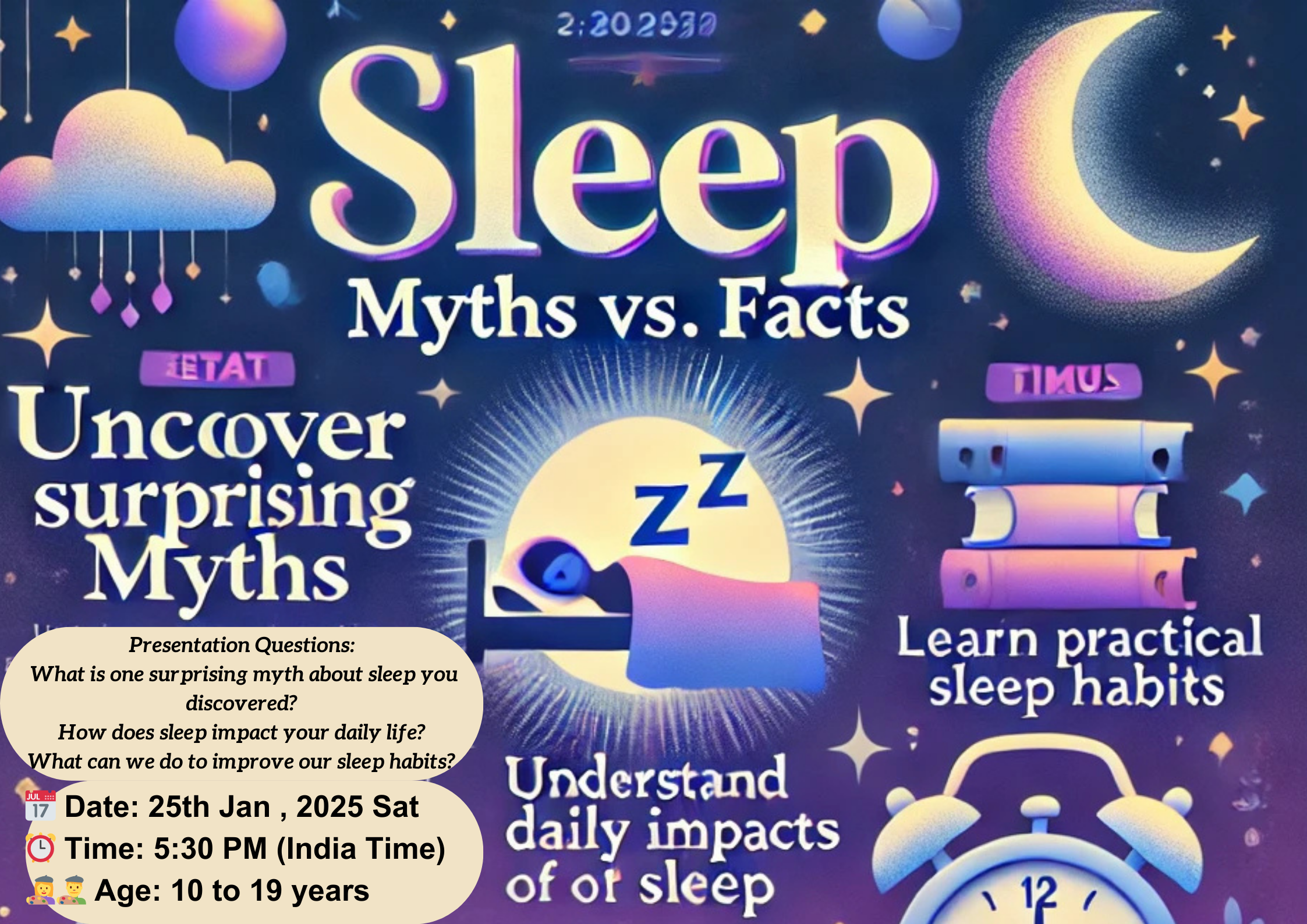
Sleep: Myths vs. Facts
Haz este proyecto con tu clase
¿De qué trata este proyecto?
- Grupo de edad
- 9-12,13-15,16-18,18+
- Duración del proyecto
- 4 semanas
Este proyecto contribuye a los siguientes objetivos globales
Objetivos de aprendizaje
Explore Sleep’s Impact: Learn how sleep affects physical health, mental well-being, and daily productivity.
Develop Healthy Habits: Discover practical strategies to improve sleep quality.
Critical Thinking: Enhance research and presentation skills through exploring evidence-based sleep facts.
Health Awareness: Foster awareness of the importance of sleep for overall health and its connection to SDG #3.
Habilidades a desarrollar
Actividades del proyecto
Cronograma del proyecto
Presentation
Presentation (January 25, 2025)
Conduct the session at 5:30 PM IST.
Students present their findings to peers and teachers.
Interactive Q&A to discuss surprising myths and practical sleep tips.
Lo que dicen los participantes
Jhansi Ravikumar
 India
India🌟 Students Share Practical Tips on Sleep! 🌟 Today’s session on "Sleep: Myths and Facts" brought together students from India, Pakistan, and Malaysia to share their thoughts and practical advice on improving sleep habits. Here are some useful tips they discussed: 🛌 Stick to a Sleep Schedule: Students emphasized the importance of going to bed and waking up at the same time every day to regulate your body clock. 📵 Limit Screen Time Before Bed: Avoiding phones, TVs, and other screens an hour before sleep helps your mind relax and improves sleep quality. 🍵 Avoid Caffeine Late in the Day: They suggested drinking herbal tea or warm milk instead of coffee or soda in the evening. 🛁 Create a Relaxing Routine: Some shared ideas like taking a warm shower, listening to calming music, or reading a book to wind down before bed. 💤 Make Your Bedroom Sleep-Friendly: Keeping the room dark, quiet, and at a comfortable temperature can help improve sleep. 🌿 Try Nature Sounds: Students talked about how soft sounds like rain or ocean waves can make falling asleep easier. Here are some myths and facts they also discussed: 🌙 Myth: You can "catch up" on sleep during weekends. 🛌 Fact: While extra sleep on weekends may help temporarily, it cannot fully reverse the effects of sleep deprivation. 🌙 Myth: Counting sheep helps you fall asleep. 🛌 Fact: While it sounds calming, counting sheep doesn't have scientific backing. Focus on deep breathing or visualizing peaceful scenes for better results. 🌙 Myth: Complete silence is necessary for a good night’s sleep. 🛌 Fact: Some people find soft background sounds, like rain or white noise, help them sleep better than complete silence. The session was a great reminder that small changes in daily habits can make a big difference in improving sleep and overall health. Thank you to Tr. Vaths from Malaysia, Tr. Adnan Sir from Pakistan. Thank you www.Class2Class.org Jhansi Ravikumar Ambassador www.Class2Class.org
Vathsala Nayer Vailathan
 Malasia