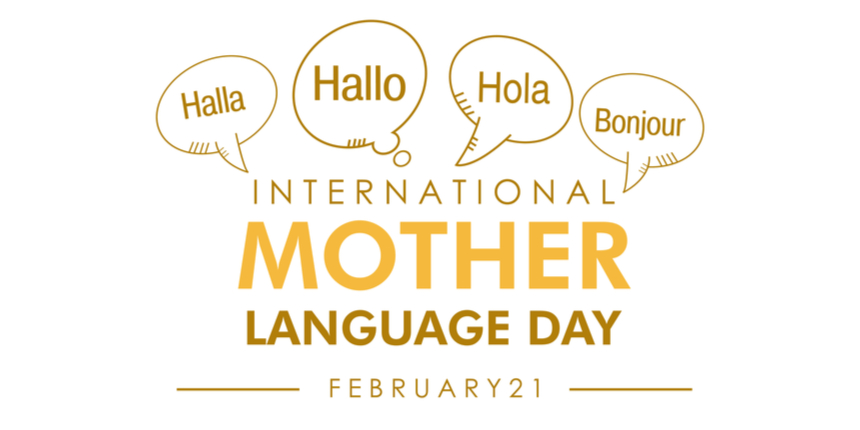
International Mother Language Day - 21st February, 2026
¿De qué trata este proyecto?
This project is about celebrating and protecting students’ mother languages by helping them explore their language, culture, and identity, share stories with international students, and create simple solutions that encourage the use and respect of mother languages in daily life.
- Grupo de edad
- 9-12,13-15,16-18,18+
- Duración del proyecto
- 4 semanas
Este proyecto contribuye a los siguientes objetivos globales
Objetivos de aprendizaje
Understand the importance of their mother language in shaping identity, culture, and emotions.
Share stories, words, and traditions related to their mother language with confidence.
Respect and appreciate different mother languages and cultures from around the world.
Communicate and collaborate with international peers in a kind and meaningful way.
Create simple ideas or materials that help protect, promote, or celebrate mother languages in daily life.
Actividades del proyecto
Cronograma del proyecto
Presentation
Week 1 – Discovering Our Mother Language
Phase: Topic Introduction & Intercultural Icebreaker
Students complete the Initial Evaluation to share what they already know about their mother language, identity, and global communication.
Teacher introduces the Mother Language Project, explaining why mother languages matter and how students will celebrate and protect them.
Students explore the project goals, timeline, and how they will work with an international partner class.
Each student shares one personal connection to their mother language (a favorite word, memory, song, or family tradition) on the Project Board.
Students create short introduction videos (30–60 seconds) sharing:
Their name
Their mother language
One thing they hope to learn
Partner classes watch each other’s videos and begin exchanging messages through the group chat.
Week 2 – Listening to Language Stories
Phase: Empathize
Students interview family members, elders, or community members about:
What the mother language means to them
How it is used at home
Challenges the language faces today
Students record responses using audio, video, or simple notes.
Teams create empathy maps showing how people feel, think, and experience their mother language.
Students collect stories, words, songs, or expressions and document them with photos or recordings.
Classes share their language stories with the international partner class and compare similarities and differences.
Students identify common themes such as pride, emotion, identity, and language loss.
Week 3 – Defining the Language Challenge
Phase: Define & Ideate
Students review empathy findings and discuss:
Why some mother languages are fading
Who is affected
Why it matters
Teams create simple cause charts or problem trees to show reasons for language loss.
Partner classes collaborate to create “How might we…” questions, such as:
How might we help children enjoy learning our mother language?
Students brainstorm many solution ideas, including:
Storytelling clubs
Mini dictionaries
Language games
Posters, videos, or digital tools
Teams group ideas and select 2–3 strong, realistic solutions together with partner classes.
Week 4 – Creating and Testing Solutions
Phase: Prototype & Test
Students create simple prototypes, such as:
Posters or mini books
Audio recordings
Short videos
Digital slides or Canva designs
Teams share prototypes with the international partner class and receive feedback.
Students test their ideas with classmates, families, or teachers by asking:
What do you like?
Is it easy to understand?
Would you use this?
Feedback is recorded and discussed.
Teams improve their solutions based on feedback and document changes made.
Week 5 – Sharing, Reflecting, and Celebrating
Phase: Presentation & Reflection
Students prepare a final presentation explaining:
The language problem
Their solution
What they learned
Classes host a Language Celebration / Showcase, in school or online.
Partner classes join a virtual sharing session to present final work and celebrate together.
Students co-create a shared reflection mural (Padlet / Slides) with key learnings.
Students complete the Final Evaluation, comparing growth from the start of the project.
Class discussion on:
How to continue using and protecting mother languages
How small actions can create big cultural impact
Lo que dicen los participantes
Jhansi Ravikumar
 India
IndiaAlexandra Ziborova
 Rusia
RusiaHANUMANT DESHMUKH
IndiaIt wasimmense pleasure to connect through different languages connecting and bonding together
Md. Nasim Mia
 Bangladés