From Roots to Today: Exploring Our Cultural Identities
Haz este proyecto con tu clase
¿De qué trata este proyecto?
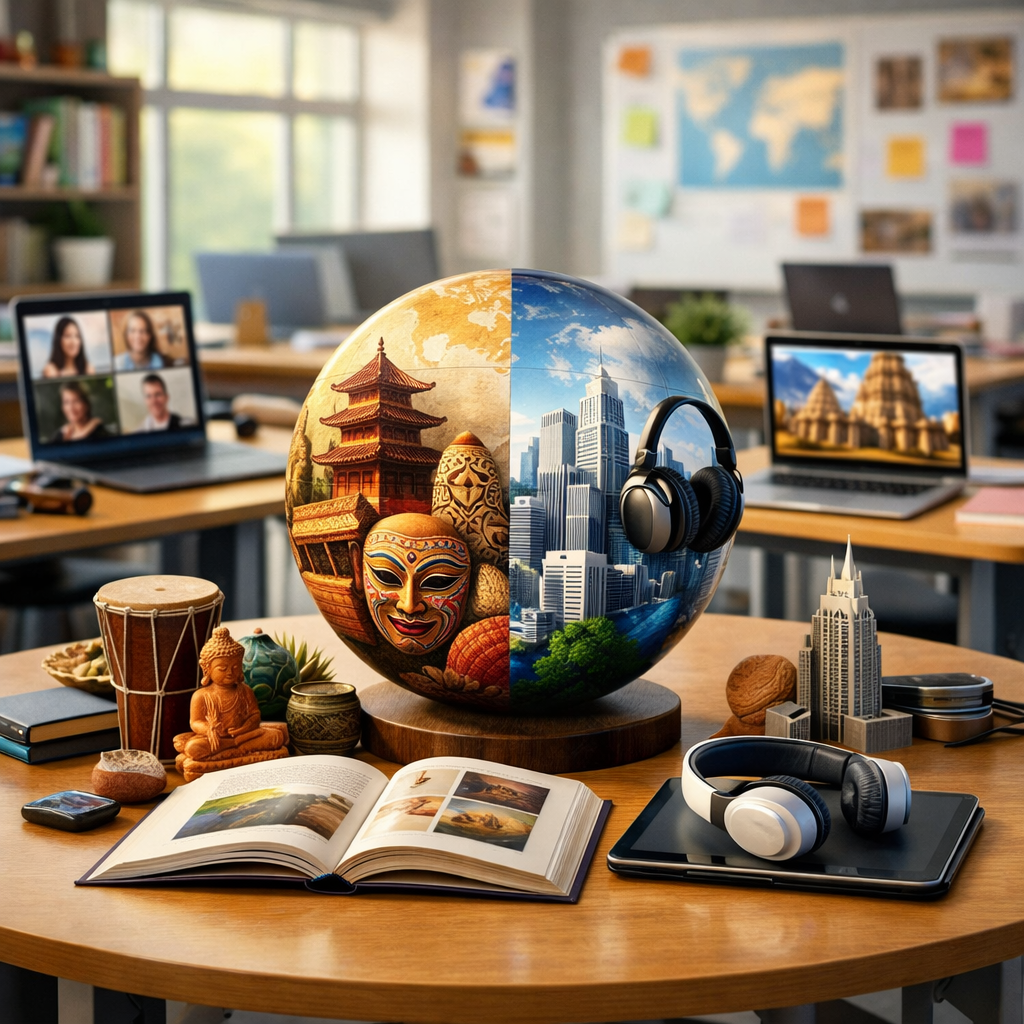
This is a special session designed for students who are participating in an international exchange class for the first time. Through this project experience, we aim to plan and develop future international exchange classes. The session will be held for one hour on April 3, 2026, from 13:30 to 14:30 (Korea Standard Time). Students create and share personal narratives or short videos explaining how one traditional cultural element from their country has influenced their contemporary identity. They participate in live or asynchronous discussions with international peers to discover common patterns in how cultures evolve and what values remain constant across generations.
- Grupo de edad
- 16-18,18+
- Duración del proyecto
- 4 semanas
Objetivos de aprendizaje
Students will be able to identify and describe how traditional and contemporary cultural practices reflect their country's values and identity, while recognizing similarities and differences with partner classrooms from other countries.
Students will be able to demonstrate intercultural communication and collaboration by comparing cultural identity elements across countries and creating shared reflections that integrate diverse perspectives from global partner classrooms.
Habilidades a desarrollar
Actividades del proyecto
Welcome to Global Cultural Exchange
Teacher presents the project purpose, goals, and collaboration structure. Students learn how they will connect with international classrooms to explore cultural identity through traditions, values, and contemporary practices. Teacher explains the week's timeline and introduces the Class2Class platform for communication and collaboration.
Meet Our Culture: Creative Introductions
Partner classes exchange creative introductions through short videos, digital murals, or photo galleries showcasing one meaningful cultural element from their community. Students post initial perceptions about cultural identity and what they want to discover from their international peers. This creates the first collaborative artifact and sets the tone for respectful exchange.
Cultural Exchange Forum: Discovering Similarities and Differences
Students present their cultural materials asynchronously on the Project Board or participate in a synchronous video call with partner classrooms. Each class shares 3-5 minute presentations, followed by guided Q&A and discussion. Students document similarities and differences in a shared collaborative space, asking questions and responding to international peers. Emphasis is on respectful dialogue and genuine curiosity about diverse perspectives.
Celebrating Global Connections: Exhibition and Showcase
Students organize a local Cultural Exchange Fair showcasing what they learned from international partners. They create exhibition materials (posters, displays, video screenings) and prepare talking points about key intercultural insights. Simultaneously, all classes contribute to a shared digital gallery on the Project Board featuring a collaborative presentation or mural that integrates cultural contributions from all participating classrooms.
Reflecting on Our Learning: Intercultural Growth
Students reflect individually and collectively on their intercultural learning journey through guiding questions: 'What did I learn about my international classmates?' 'What did I discover about my own culture?' 'Why is it valuable to know other ways of seeing the world?' Students complete self-assessments on communication, collaboration, and respect. Classes exchange appreciation messages and co-create a final reflection mural summarizing key takeaways and insights from the global exchange.
Cronograma del proyecto
Launch the Global Cultural Exchange Project
Teacher presents the project purpose, goals, and collaboration structure, explaining how students will connect with international classrooms to explore cultural identity through traditions, values, and contemporary practices.
Students review the week's timeline together and learn how to navigate the Class2Class platform for communication and collaboration with global partners.
Each student identifies one meaningful cultural element from their community that they are excited to share and discuss with international peers.
Meet Our Culture: Creative Introductions
Students work in small teams to create a short video, digital mural, or photo gallery (30-60 seconds) showcasing one meaningful cultural element from their community, such as a traditional celebration, art form, food, or value.
Each team posts their creative introduction on the Class2Class Project Board for partner classrooms to view and explore.
Students watch introductions from international partner classrooms and document initial observations about cultural identity on a shared Padlet or Google Doc.
Each student posts one initial perception about what cultural identity means and one question they want to explore with their international peers on the Project Board.
Guide students to respond respectfully to at least two partner classroom posts, expressing genuine curiosity and openness to different perspectives.
Explore the Driving Question: How Do Traditional and Contemporary Practices Reflect Our Cultural Identity?
Teacher facilitates a whole-class discussion introducing the driving question: 'How do traditional and contemporary cultural practices reflect your country's values and identity?'
Students brainstorm in small groups examples of traditional practices (e.g., ceremonies, clothing, language) and contemporary practices (e.g., social media trends, modern art, current celebrations) from their own culture.
Each group shares one example of a traditional practice and one contemporary practice, explaining what values or identity elements each reflects.
Students use the Class2Class group chat to ask their international peers how they see similarities and differences in how tradition and modernity shape cultural identity in their countries.
Research and Prepare Your Cultural Materials
Students research 3-5 specific cultural identity elements from their own country, focusing on both traditional and contemporary examples, such as traditional clothing paired with modern fashion adaptations, historical celebrations alongside contemporary versions, or ancestral values reflected in current social movements.
Each student collects or creates supporting materials including photos, short written descriptions, personal stories, or brief video clips that illustrate how their chosen elements reflect their country's values and identity.
Guide students to organize their materials in a shared Google Drive folder or Canva presentation, ensuring each element clearly shows the connection between tradition and contemporary expression.
Students prepare 3-5 minute talking points explaining what each cultural element represents and why it is important to their national or community identity.
Teams review each other's materials within the class and provide constructive feedback using the Class2Class group chat to strengthen the quality and clarity of their cultural presentations.
Cultural Exchange Forum: Discovering Similarities and Differences
For Activity 3, students present their cultural materials asynchronously on the Project Board or participate in a synchronous video call with partner classrooms, sharing 3-5 minute presentations about how traditional and contemporary practices reflect their country's identity.
Partner classrooms ask clarifying questions and share initial observations about the cultural elements presented, fostering respectful dialogue and genuine curiosity.
Students document similarities and differences they notice between their own culture and international partners' cultures in a shared collaborative Google Doc or Padlet, noting patterns in how different countries balance tradition with contemporary change.
Each student responds to at least three posts from international peers with thoughtful questions or reflections that deepen intercultural understanding, using the Class2Class platform to ensure all communication is visible and collaborative.
Guide teams to analyze the responses and create a comparison chart or visual summary showing key similarities and differences in how cultural identity is expressed across participating countries.
Celebrating Global Connections: Exhibition and Showcase
For Activity 4, students organize a local Cultural Exchange Fair showcasing what they learned from international partners, creating exhibition materials such as posters, displays, or video screenings that highlight key intercultural insights.
Students prepare talking points and practice explaining to local school community visitors how traditional and contemporary cultural practices from different countries reflect each nation's unique values and identity.
All classes contribute to a shared digital gallery on the Class2Class Project Board featuring a collaborative presentation or interactive mural that integrates cultural contributions from all participating classrooms, such as a digital world map with cultural highlights or a multimedia timeline showing tradition-to-contemporary evolution.
Students use Canva or Google Slides to create a final presentation that synthesizes the cultural exchange, highlighting surprising discoveries, common themes, and how diversity strengthens global understanding.
Each student writes a short caption or reflection (2-3 sentences) for the shared digital gallery explaining one key insight they gained about cultural identity from the global exchange.
Reflecting on Our Learning: Intercultural Growth
For Activity 5, students reflect individually on their intercultural learning journey by responding to guiding questions in a shared Google Form or journal: 'What did I learn about my international classmates?' 'What did I discover about my own culture?' 'Why is it valuable to know other ways of seeing the world?'
Students complete self-assessments on their intercultural communication, collaboration, and respect, using a simple rubric or checklist to evaluate their own growth throughout the project.
Classes exchange appreciation messages through the Class2Class group chat or Project Board, with each student writing a brief thank you message to one international peer highlighting something they learned or appreciated from them.
Guide students to co-create a final reflection mural using Padlet or a collaborative Canva board where each student contributes one key takeaway or insight from the global cultural exchange, visually representing the collective learning of all participating classrooms.
Facilitate a whole-class closing discussion where students share their most meaningful intercultural experience from the project and discuss how understanding diverse cultural perspectives will influence their future actions as global citizens.
Lo que dicen los participantes
Dasol Park
 Corea del Sur
Interesting class for sure
Jhansi Ravikumar
 India
IndiaInteresting collaboration