
Jhansi Ravikumar ha creado el proyecto "🌍 Unlearning Cultures: Myths & Facts" en Class2Class.org
Solicitar unirse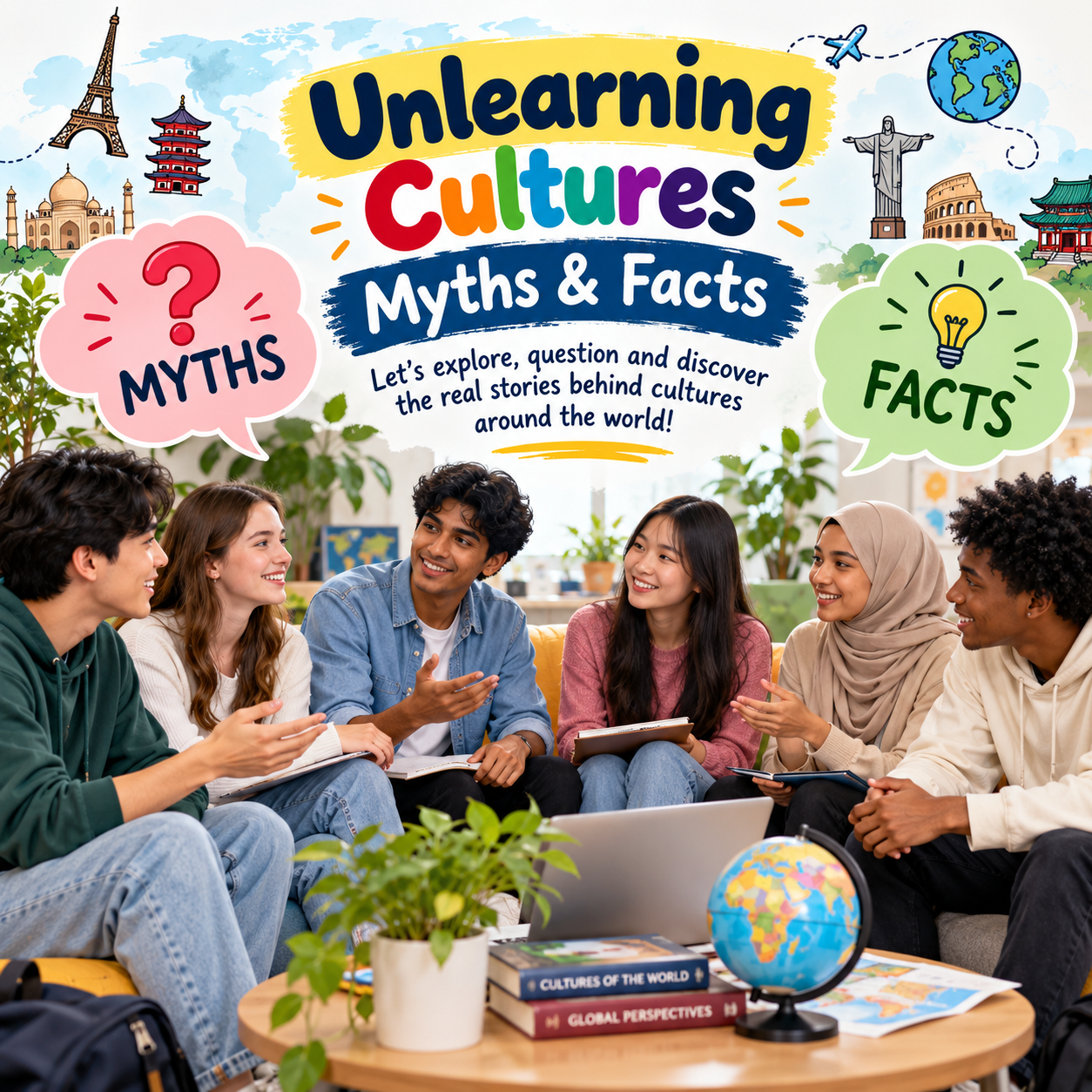
🌍 Unlearning Cultures: Myths & Facts
¿De qué trata este proyecto?
Students dive deeper by analyzing where their misconceptions came from, examining how media and limited experiences shape cultural assumptions, then conduct interviews with their partner class to understand everyday life, values, and diversity within...
- Edad de los estudiantes
- 13-15 años, 16-18 años, 18+ años
- Duración del proyecto
- 20 semanas
- Mes de inicio
- Octubre 2026
Este proyecto contribuye a los siguientes objetivos globales
Este proyecto promueve y protege estos derechos de la niñez
Objetivos de aprendizaje
Students will be able to identify common myths and misconceptions about different cultures and describe where these assumptions originate from media, stories, and limited experiences.
Students will be able to demonstrate intercultural communication by conducting interviews with partner classrooms to gather authentic perspectives on everyday life and cultural values.
Students will be able to analyze and compare myths versus facts about cultures by examining patterns in stereotypes and distinguishing between assumptions and lived realities across international partners.
Students will be able to evaluate their own biases and misconceptions, assess why certain cultural stereotypes persist, and reflect critically on how their understanding has evolved through direct intercultural exchange.
Habilidades a desarrollar
Actividades del proyecto
Mapping Our Assumptions: What Do We Think We Know?
Students brainstorm and list common beliefs, stereotypes, and assumptions they hold about their partner culture. They explore where these ideas come from (movies, social media, family stories, school lessons) and share in small groups to identify patterns in how misconceptions form.
Myth vs. Fact: Research and Analysis
Students research their partner culture using reliable sources, news, documentaries, and academic articles to gather factual information about daily life, values, traditions, and diversity. They create a comparative chart or infographic showing myths they identified earlier alongside verified facts, noting where the two diverge.
Live Interview Exchange with Partner Class
Students conduct a real-time video call with their partner class to ask prepared questions about everyday life, family, school, traditions, and what they wish others knew about their culture. Partners share authentic perspectives and students take notes on surprising discoveries and how lived experience differs from assumptions.
Analyzing Patterns: Why Do Stereotypes Persist?
Students analyze the data from their research and interviews to identify patterns in where stereotypes come from and why they stick. They examine the role of media representation, limited exposure, historical narratives, and confirmation bias, then document their findings in a research brief or case study.
Peer Feedback and Perspective Exchange
Students share their myth-versus-fact findings and stereotype analysis with their partner class through a shared digital platform or asynchronous forum. They read and respond to partner insights, asking clarifying questions and offering their own observations about how understanding has shifted.
Reflecting on Bias and Unlearning
Students write a personal reflection journal entry on how their assumptions have changed, what surprised them most, and what they now understand about their own biases and the diversity within and between cultures. They consider concrete steps they can take to challenge stereotypes in their own communities.
Presenting Our Learning: From Myth to Understanding
Students create a final presentation (slides, infographic, or exhibition) showcasing their journey from initial assumptions to verified facts, key insights from partner interviews, and their analysis of why stereotypes persist. They present to their class and reflect on how the exchange changed their perspective on intercultural understanding.