
JOHN MAINA ha creado el proyecto "Math Barriers Around the World: Building Inclusive Learning Together" en Class2Class.org
Solicitar unirse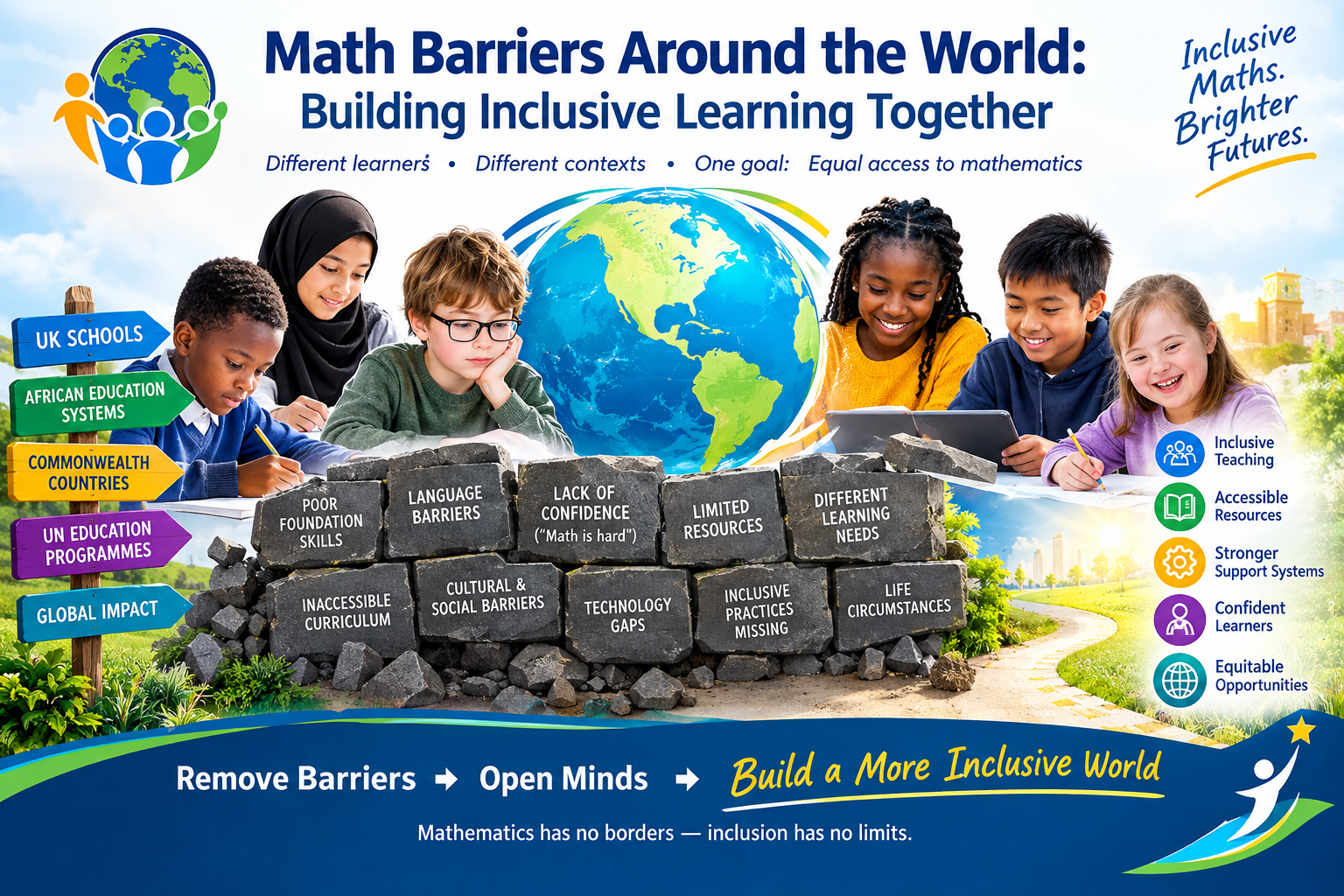
Math Barriers Around the World: Building Inclusive Learning Together
¿De qué trata este proyecto?
Students explore and document one mathematics barrier they notice in their own classroom, then share their observation with a partner class across the globe to discover which barriers are universal and which are unique to their context. Together, the...
- Edad de los estudiantes
- 9-12 años, 13-15 años, 16-18 años, 18+ años
- Duración del proyecto
- 4 semanas
- Mes de inicio
- Noviembre 2026
Este proyecto contribuye a los siguientes objetivos globales
Este proyecto promueve y protege estos derechos de la niñez
Objetivos de aprendizaje
Students will be able to identify and describe mathematics barriers in their own classroom, then compare them with barriers observed by partner students from another country to recognize universal and unique learning challenges.
Students will be able to collaborate with international peers to create a visual comparison that demonstrates how different learners experience the same mathematical concept, applying critical thinking to explain connections across cultures.
Habilidades a desarrollar
Actividades del proyecto
What Makes Math Hard? Spotting Barriers in Our Class
Students explore their own classroom to identify one specific mathematics barrier they notice—such as difficulty with word problems, understanding fractions, or staying focused during lessons. They document their observation with examples and reflect on why they think this barrier exists.
Comparing Math Barriers Across the World
Students exchange their documented barriers with a partner class and analyze the responses to discover which barriers are universal and which are unique to their context. They work in small groups to sort and discuss the findings, then prepare to create a visual comparison.
Creating a Visual Comparison of Math Barriers
Students collaborate with their international partners (asynchronously or via shared digital space) to design a simple visual comparison—such as a chart, infographic, or illustrated poster—showing how different learners experience the same mathematical concept. They explain the connections they discovered and reflect on what they learned about barriers across cultures.
Sharing Our Learning: Math Barriers Around the World
Students present their visual comparison and explain what they discovered about universal and unique math barriers. They reflect on how understanding barriers from other classrooms has changed their thinking about helping all learners succeed in mathematics.
Applying the Graduated Approach: From Barrier to Support Plan
Students use the Assess-Plan-Do-Review cycle to dig deeper into one math barrier they or a partner student observed, identifying the root cause, designing a simple support strategy, and predicting what success would look like. They then compare their support ideas with the partner class to see which strategies work across different contexts.