
Haruna Hashim has created the project "Building Faith, Growth, and Community: Young Designers for Change" in Class2Class.org
Request to join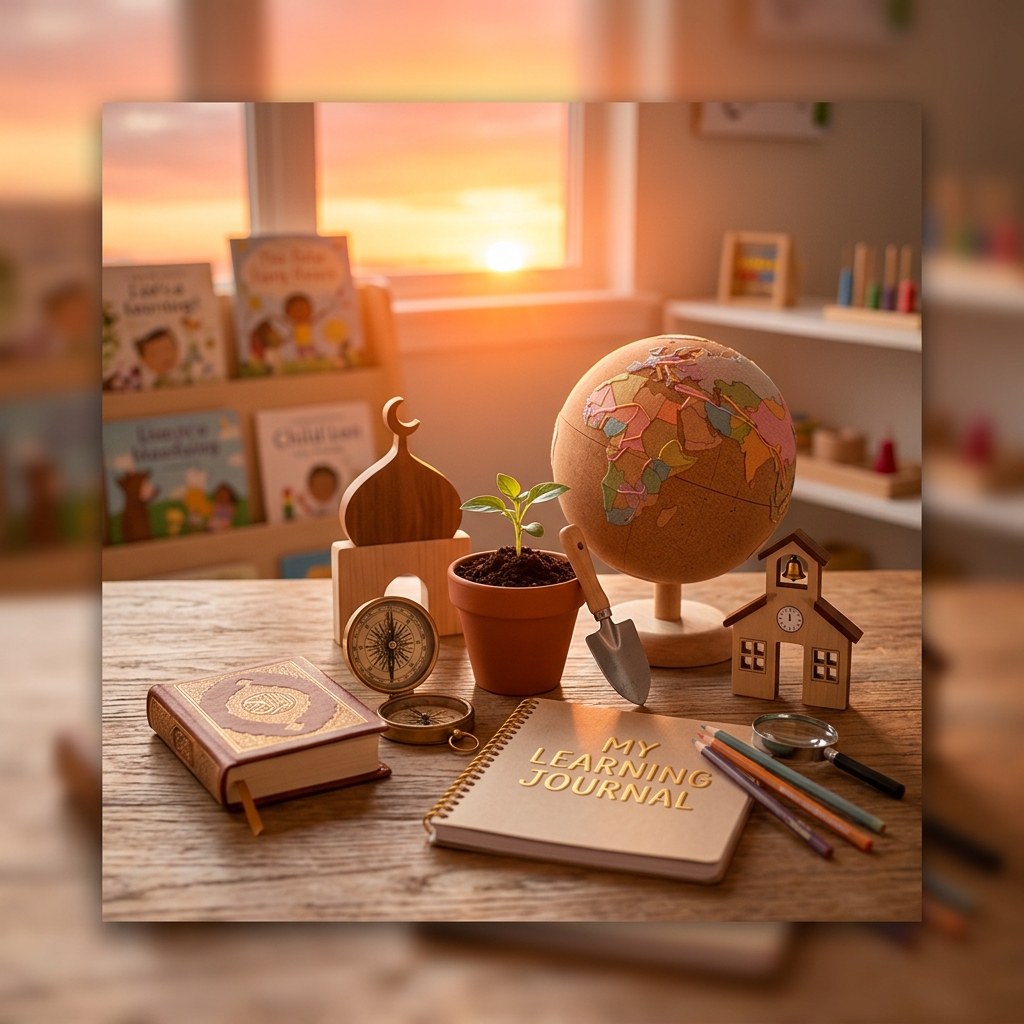
Building Faith, Growth, and Community: Young Designers for Change
What is this project about?
Students engage in application & creation activities focused on Islamic studies, English, Agriculture and Civic education.
- Age of Students
- 0-8
- Project Duration
- 4 weeks
- Starting Month
- July 2026
- Language
- Inglés
Learning Outcomes
Students will be able to identify and describe basic Islamic principles, agricultural practices, and civic responsibilities in their local community through collaborative discussions with peers.
Students will be able to demonstrate understanding of Islamic values, farming techniques, and community roles by applying these concepts to solve simple, real-world problems in their neighborhood with their classmates.
Students will be able to analyze and compare how Islamic teachings, sustainable agriculture, and civic duties are practiced differently across their community and in partner classrooms from other countries.
Students will be able to evaluate the effectiveness of agricultural and civic solutions by assessing how Islamic principles can guide sustainable practices and community engagement in addressing local challenges.
Students will be able to design and create an innovative solution that integrates Islamic values, agricultural improvements, and civic action to address a real community need, collaborating with international partner classrooms to refine their ideas.
Skills to develop
Project Activities
Project Launch: Design Thinking for Global Impact
Teacher introduces the project purpose, explaining how students will use design thinking to address real-world challenges in their community while collaborating with an international partner classroom. Students learn the nine-phase design thinking process and how their work connects to Islamic values, sustainable agriculture, and civic responsibility. Teacher clarifies learning goals and collaboration expectations.
Cultural Exchange: Meet Our Partner Classroom
Partner classes exchange creative introductions through short videos, digital murals, or recorded presentations showing their communities, local challenges, and perspectives on problem-solving. Students identify initial observations about agricultural, civic, and Islamic-related challenges in their own context and compare these with their partner class's observations. Create a collaborative digital mural mapping both communities' challenges side by side.
Deep Dive: Understanding Our Community's Challenges
Students conduct interviews with family members, community leaders, and local farmers to understand real challenges related to agriculture, civic responsibilities, and Islamic principles in their neighborhood. Students observe local farming practices, document community needs, and create empathy maps for affected people. Compile findings into visual problem maps and interview records. Share discoveries with partner class through the project board and discuss how these challenges appear differently across contexts.
Problem Definition Workshop: Formulating Our Challenge
Students analyze empathy findings to identify key insights about the interconnected challenges of sustainable agriculture, civic engagement, and Islamic values in their community. Teams create cause diagrams (fishbone or problem tree) and develop 3-5 'How might we...?' questions. Collaborate with partner class to synthesize findings, agree on a shared problem statement that includes who is affected, what the problem is, why it matters, and context. Document success criteria for evaluating solutions.
Brainstorm & Select: Generating Solution Ideas
Students use multiple brainstorming techniques (classic brainstorming, SCAMPER, rapid sketching) to generate 15-30 ideas for solutions integrating Islamic principles, sustainable agriculture, and civic action. Organize and cluster similar ideas, then evaluate using matrices considering impact, viability, creativity, and feasibility. Share idea banks with partner class and conduct international ideation sessions using 'Yes, and...' to build on each other's ideas. Jointly select 2-3 finalist ideas for prototyping with clear justification.
Build & Iterate: Creating Solution Prototypes
Students construct tangible prototypes of selected ideas using recycled materials, cardboard, digital tools (Canva, Figma), or role-play demonstrations. Each prototype should be simple enough to test quickly but clear enough to communicate the core idea. Document prototypes with photos and short videos. Present prototypes to partner class via recorded demonstrations or live video call, explaining what the solution is, how it works, and who it helps. Incorporate international feedback to refine prototypes into improved versions.
Test & Learn: Gathering Real-World Feedback
Students present prototypes to target users in their community (students, families, teachers, farmers, civic leaders) and observe their reactions without intervening. Conduct structured interviews asking what worked well, what was confusing, and what could be improved. Administer feedback surveys and document observations with photos or notes. Analyze feedback to identify themes and patterns. Create improved versions (2.0) incorporating learnings. Compare testing results with partner class to understand context-specific insights.
Showcase & Celebrate: Sharing Our Solutions
Students organize a local Solution Showcase or Innovation Fair presenting final solutions to the school community. Deliver a 3-5 minute pitch explaining the problem, design process, solution, testing results, and potential impact. Display prototypes and distribute informational materials. Simultaneously, conduct a joint virtual celebration with partner class where both groups present solutions, compare how context shaped their approaches, and co-create a compilation video documenting the complete design journey from problem identification through testing to final solutions.
Reflect & Plan Forward: Design Thinking Insights
Students engage in guided reflection on the entire design thinking process through discussion, journaling, or video reflections addressing: What did we learn about solving real-world problems? How did our solution evolve? What was most challenging? What would we do differently? How could our solution create real community impact? Conduct peer feedback highlighting strengths and improvements. Complete self-assessments on critical thinking, creativity, and collaboration. Exchange final reflections with partner class and create a shared digital mural of design thinking takeaways from both contexts.
Project Timeline
Step 1
Teacher presents the project purpose in Activity 1, explaining how students will use design thinking to solve real challenges in their community while working with an international partner class
Students learn about the nine-phase design thinking process through a simple visual roadmap showing each step from problem discovery to celebration
Teacher connects the project to Islamic values, sustainable agriculture, and civic responsibility, helping students understand how these three areas connect to solving community problems
Students discuss what they already know about challenges in their neighborhood related to farming, community roles, and Islamic principles
Step 2
Students create short introduction videos (30-60 seconds) showing their names, families, homes, and one thing they like about their community
Each class posts their videos on the project board for the partner classroom to view and respond to
Students watch partner class videos and write down 3 observations about their partner's community (e.g., 'They have rice farms' or 'Their houses look different')
Students participate in an asynchronous Q&A session using the group chat, asking their partners questions about daily life, school, and community
Teams collaborate to create a digital mural using Padlet or Canva showing both communities side by side, with photos, drawings, and fun facts from both classes
Step 3
Students conduct simple interviews with 2-3 family members or community members, asking questions like 'What farming happens near your home?', 'What jobs help our community?', and 'What Islamic values do you practice daily?'
Students take walks through their neighborhood to observe local farming practices, community spaces, and activities, documenting observations with drawings or photos
Each student creates an empathy map (simple drawing showing what people see, hear, feel, and do) for someone affected by challenges in their community
Students compile their findings into a visual problem map showing where challenges happen in their neighborhood (e.g., marking farms, community centers, schools)
Students post their discoveries on the project board with photos and notes, then read and discuss what their partner class discovered about their community
Step 4
Students review all their empathy findings and interview notes, highlighting the most important discoveries about agriculture, civic needs, and Islamic values in their community
Teams create simple cause diagrams (drawing arrows showing what causes problems) and develop 3-5 'How might we...?' questions (e.g., 'How might we help farmers grow more food?' or 'How might we teach our community about Islamic values?')
Students work with their partner class using the group chat to share their 'How might we...?' questions and discuss which problems affect both communities
Together with the partner class, students agree on one shared problem statement that describes who is affected, what the problem is, and why it matters
Teams document success criteria by listing what a good solution should do (e.g., 'Help 20 families' or 'Use Islamic principles')
Step 5
Students use brainstorming techniques to generate 15-30 ideas for solutions that combine Islamic principles, sustainable farming, and civic action, drawing sketches or writing descriptions of each idea
Teams organize similar ideas into groups and give each group a name (e.g., 'Education Ideas' or 'Farming Ideas')
Students evaluate their ideas using a simple matrix, scoring each idea on impact (how many people it helps), creativity (how new it is), and feasibility (how easy it is to do)
Teams share their top 5 ideas on the project board, and the partner class responds using 'Yes, and...' technique to build on each other's ideas (e.g., 'Yes, a community garden is great, and we could add a water system')
Students jointly select 2-3 finalist ideas with their partner class, writing down clear reasons why these ideas could work best
Step 6
Students construct simple prototypes of their selected ideas using recycled materials, cardboard, clay, or digital tools like Canva, creating versions that clearly show how the solution works
Each team documents their prototype with photos and a short video (30-60 seconds) explaining what the solution is, how it works, and who it helps
Students present their prototypes to the partner class through recorded video demonstrations or a live video call, answering questions about their design
Partner class provides feedback on the prototypes using the group chat, suggesting improvements and sharing what they like about the ideas
Teams create improved versions (2.0) of their prototypes, incorporating the international feedback and making the solutions clearer or more effective
Step 7
Students present their prototypes to target users in their community (classmates, family members, teachers, local farmers, or community leaders), observing and noting their reactions
Teams conduct structured interviews with 3-5 users, asking questions like 'What do you like about this solution?', 'What is confusing?', and 'How could we make it better?'
Students create simple feedback surveys with 3-4 questions and collect responses from community members, recording answers on paper or using a Google Form
Teams analyze all feedback to find patterns (e.g., 'Most people said the solution is easy to use' or 'Everyone wanted it to be cheaper')
Students create improved versions (2.0) of their prototypes based on testing feedback and compare their testing results with the partner class to understand how context changed their solutions
Step 8
Students organize a local Solution Showcase or Innovation Fair in their school, setting up displays of their final prototypes with colorful posters explaining the problem and solution
Each team delivers a 3-5 minute pitch to the school community, explaining the problem they found, their design process, the solution, testing results, and how it helps their community
Students create informational materials (flyers, posters, or digital slides using Canva) to share their solutions with families and community members
Both classes conduct a joint virtual celebration using a video call where each team presents their final solution to the partner class, comparing how their different communities shaped their approaches
Students co-create a compilation video documenting the complete design journey from problem discovery through testing to final solutions, posted on the project board for families to view
Step 9
Students engage in guided reflection through discussion, journaling, or short video reflections, answering questions like 'What did we learn about solving real-world problems?', 'How did our solution change?', and 'What was most challenging?'
Each student completes a self-assessment evaluating their own critical thinking, creativity, collaboration, and understanding of Islamic values, agriculture, and civic responsibility
Teams conduct peer feedback sessions where classmates highlight each other's strengths and suggest improvements, using the group chat to share kind and helpful comments
Students exchange final reflections with the partner class, reading and responding to their peers' learning insights through the project board
Both classes collaborate to create a shared digital mural (using Padlet or Canva) of design thinking takeaways from both contexts, celebrating what they learned together about solving global challenges locally