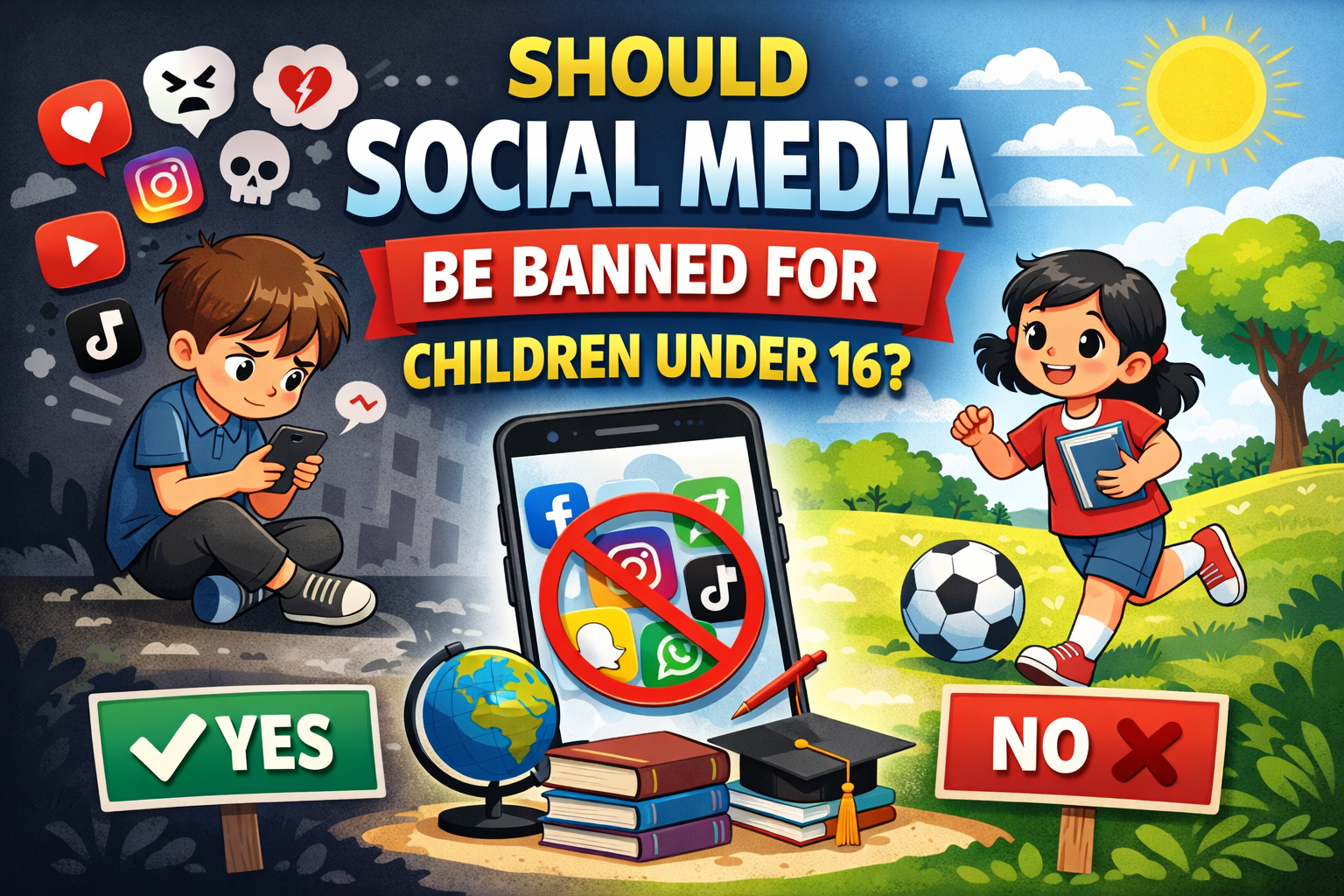
Social Media Ban for Kids Under 16: Necessary or Not?
Do this project with your class
What is this project about?
- Age group
- 9-12,13-15
- Project Duration
- 4 weeks
This project contributes to the following global goals
Learning Outcomes
- Understand the impact of social media on children under the age of 16, including its benefits and risks.
- Research and evaluate information from credible sources to support or oppose a given viewpoint.
- Analyse multiple perspectives on the issue of social media regulation for minors.
- Construct evidence-based arguments using facts, statistics, expert opinions, and real-life examples.
- Organize and present information clearly and effectively using digital presentation tools.
- Demonstrate responsible digital citizenship by acknowledging sources and using information ethically.
Skills to develop
Project Activities
Project activity
Project Timeline
Presentation
PPT expectation and rubric:
https://www.canva.com/design/DAG8hqgcICM/VeZTKJG-Vz7piCT8s-xT3g/edit?utm_content=DAG8hqgcICM&utm_campaign=designshare&utm_medium=link2&utm_source=sharebutton
25 December – Project Launch
Introduction of the project topic
Explanation of objectives, expectations, and assessment criteria
Students choose their position (Agree / Disagree)
26–28 December – Research Phase
Students conduct research using credible sources
Collection of facts, statistics, expert opinions, and real-life examples
Shortlisting relevant information for the presentation
29–30 December – Content Planning
Organizing researched content
Creating a slide-wise outline
Finalizing arguments and supporting evidence
31 December – 2 January – PPT Creation
Designing slides
Adding content, visuals, charts, and graphs
Preparing the References slide
3–4 January – Review and Refinement
Self-review and editing
Teacher/peer feedback (if applicable)
Improving clarity, design, and flow
5–6 January – Practice and Final Submission
Rehearsal of presentation
Final corrections
Submission of PPT
7 January – Presentation Day
Student presentations
Feedback and evaluation
What participants say
Fiza Choudhary
 India
IndiaJhansi Ravikumar
IndiaVarsha Pangarkar
IndiaVidya Yaligeti
IndiaGopal Nagrajan
IndiaPreethi Aruldas
IndiaClass2Class gave us a platform to showcase our children's talent and share their ideas about the project. Great collaboration and Awesome experience!
Dhanashri Rawool Rawool
India