Reducing inequalities one step at a time
Do this project with your class
What is this project about?
This project focused on exploring SDG 10: Reducing Inequalities, with a specific emphasis on inclusion and diversity in schools and communities. The students, guided by their teacher, used design thinking principles to identify and address issues of inclusion in their local environment.
- Age group
- 13-15,16-18
- Project Duration
- 4 weeks
This project contributes to the following global goals
Learning Outcomes
- Develop critical thinking skills. Students engaged in deep discussions and analyzed real-life situations of inclusion and diversity in their school and community, encouraging critical thinking and empathy for others' perspectives.
- Advocate for change through civic engagement. Students took their ideas beyond the classroom, actively engaging with local authorities and community stakeholders to advocate for policy changes and raise awareness about the importance of inclusion.
Evaluate
Skills to develop
Intercultural Communication
Critical Thinking & Problem-Solving
Global Awareness
Digital Literacy
Collaboration & Teamwork
Adaptability & Leadership
Emotional Intelligence
Creativity & Innovation
Project Activities
1
Project activity
Project Timeline
1
Week 1
Presentation
Step 1: Empathize
- Share a true story, for example, Gisel shared a letter written by a 9-year-old girl about her sister with Down syndrome and autism.
- The students read the letter and analyzed it in groups to evaluate how to act in response to the problem.
- Adults with different conditions were invited to speak with the students to learn more about the problem.
Step 2: Define
- Students researched inclusion in their school and town.
- They worked in groups to ask questions, take pictures, and gather information.
- Findings were presented to the class.
Step 3: Ideate
- After presentations, students brainstormed ideas to take action in their school.
- Three main ideas were developed:
- Music for a Cause: Changing lyrics of a song to promote inclusion.
- Pictograms at school: Using visual aids to improve communication.
- Changing desks and chairs: Modifying furniture to be more inclusive.
Step 4: Prototype y test
- By proposing more than one solution to the problem, they developed more than one prototype, such as:
- The students wrote a special song together.
- They collected 230 tennis balls, which would be used to adapt desks and chairs.
- They met with local government officials to plan pictograms that will facilitate visual learning for children with disabilities.
Step 5: Presentation
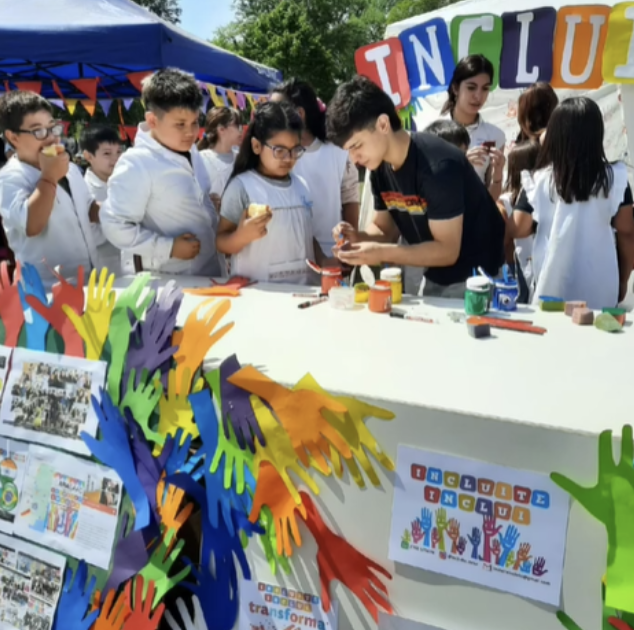
- The project was shared with the school and community.
- A special opening was held to showcase their work and raise awareness.
- The project reached autism institutions, local news channels, health institutions, and the local government.
- Students presented their ideas to other schools for replication.
More information about the project: Here
What participants say
5.0
1 Review
C. Denmark
Class2Class .org
Denmark🎉 Congratulations on all the great work you've done on this project! Your effort and dedication really shine through. 👏