
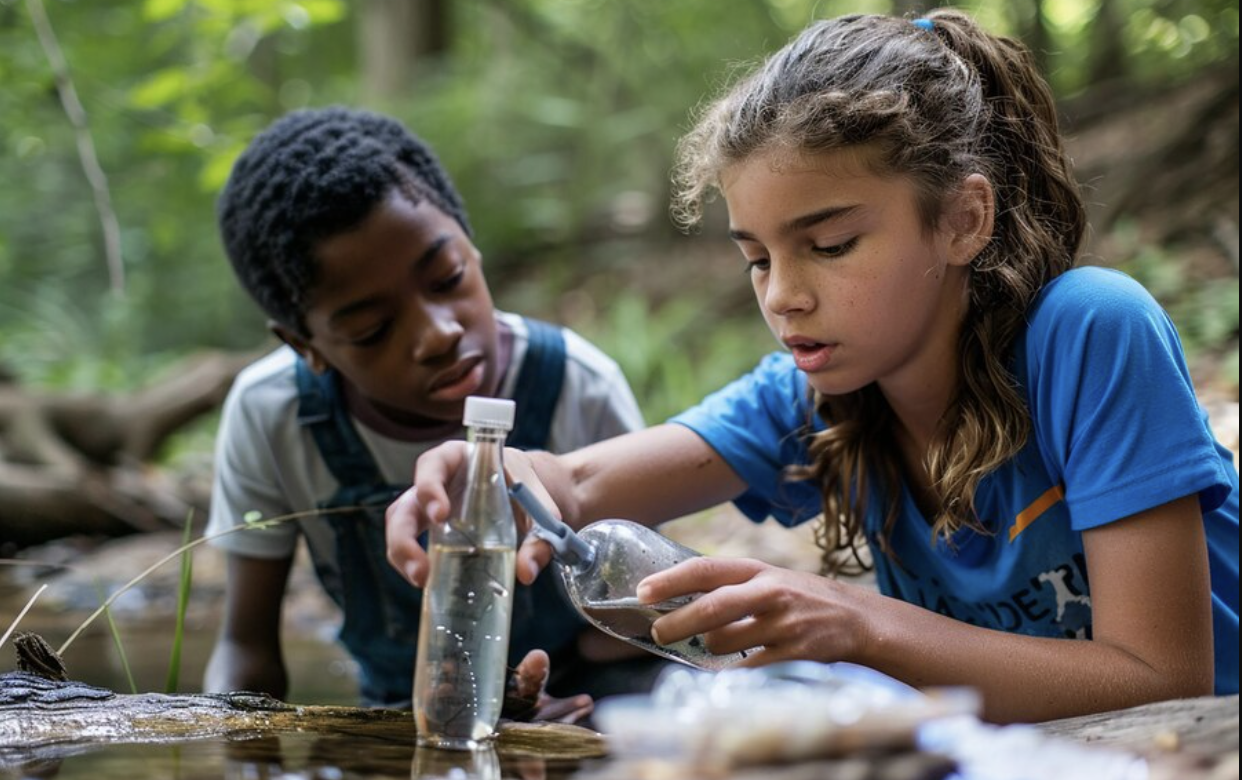
Water Warriors: Global Solutions for Local Water Challenges

What is this project about?

Students will collaborate across borders to investigate water conservation and access issues in their local communities. Using design thinking methodology, they'll work together to develop and implement practical solutions that promote responsible water usage and raise awareness about water conservation.

Age group
6-8, 9-12, 13-15
Project Duration
4 weeks
Language
English, Spanish, Danish

This project contributes to the following global goals
Clean Water and Sanitation

Learning Outcomes

  1. Understand global water challenges and their impact on different communities.
  2. Develop problem-solving skills through the design thinking process.
  3. Enhance research and analytical abilities through water usage investigation.
  4. Strengthen cross-cultural communication and collaboration skills.
  5. Create practical solutions for water conservation.
  6. Foster environmental stewardship and global citizenship.

Evaluate

Skills to develop

Intercultural Communication
Critical Thinking & Problem-Solving
Global Awareness
Digital Literacy
Collaboration & Teamwork
Collaboration

Project Timeline

1
Week 1

Presentation

Phase:Presentation & Dissemination

Step 1: Empathize

  • Explain the project objectives to the students.
  • Organize groups of 4 or 5 students to work collaboratively.
  • Students research water usage patterns in their communities.
  • Interview family members and local communities about water habits.
  • Students will prepare a brief one-page report summarizing their key findings clearly and concisely.
  • Share findings with international partners using the platform's board feature.

Step 2: Define
  • Students will review and analyze the collected information on the platform’s board.
  • Guide them in identifying specific water-related challenges in both communities.
  • Support students in:
    1. Recognizing issues within their own community.
    2. Identifying shared challenges across different contexts.
    3. Selecting a key problem to focus on and address.
  • Students will then delve deeper into the chosen challenge and publish their findings on the platform, encouraging collaborative brainstorming with partner classes.

Step 3: Ideate
  • Facilitate a creative session where students propose potential solutions to the identified problem.
  • Guide the teams to evaluate the ideas and choose the most suitable solution based on the problem and available resources.
  • Use the platform’s board to share the selected idea through drawings, descriptions, or diagrams of the ideal solution.
  • Invite the partner class to review the proposals, provide feedback, or ask questions that encourage reflection and improvements.

Step 4: Prototype
  • Support students in developing a prototype for their solution, which could take the form of a drawing, a digital design, or a mock-up.
  • Encourage the use of recyclable materials to construct prototypes, fostering sustainability in the process.
  • Suggested prototype ideas include:
    1. Innovative tools or devices.
    2. Creative educational models.
    3. Sustainable design concepts tailored to address the identified problem.
  • Some examples:
    1. Water hero home kit. A simple monitoring system students can create using basic materials like plastic bottles and markers. The kit includes a rain gauge made from recycled bottles, shower timer using a homemade sand clock, and colorful reminder cards for water-saving habits. Students can test these in their homes and share results through the Class2Class.org project board.
    2. H2O guardian comic book. Students design an educational comic book featuring a water-saving superhero who teaches water conservation through adventures. The prototype includes hand-drawn or digital illustrations, simple storylines in multiple languages, and interactive elements like water usage tracking sheets. Partner classes can collaborate on storylines through the platform's collaboration tools.
    3. Water saver challenge game. A board game prototype designed by students to teach water conservation habits. Made with recycled materials, the game includes challenge cards, water-saving action squares, and point systems for good habits. Partner classes can test the game virtually through the platform's video features and provide feedback for improvements.

Step 5: Test and Preparation
  • Guide students in refining their prototype, ensuring it clearly reflects the solution to the identified problem.
  • Support students in preparing a simple PowerPoint (PPT) presentation to explain their proposed solution.
  • Structure of the presentation:
    • Introduction: Briefly summarize the problem being addressed.
    • Solution: Explain how the proposal works and how it tackles the problem.
    • Conclusion: Highlight the conclusions and lessons learned during the process.
This will ensure clarity and effectiveness in communicating with their international peers.

Step 6: Final Presentation
  • Organize a video call with the partner classes to share the final work.
  • Each team presents their prototypes or proposed solutions to the identified problem.
  • Encourage a feedback session where the classes can provide constructive comments.
  • At the end, encourage students to share their learnings and reflections on the process, highlighting how they collaborated to find solutions and what new perspectives they gained throughout the project.

Assessment and reflection ✍️


  • Rubrics to assess student participation, collaboration, and the quality of their research and presentations.
  • Reflective journal prompts to encourage students to think critically about their learning, personal growth, and the potential impact of their actions.
  • Peer and self-assessment opportunities to foster accountability and ownership of learning.

Teacher tips 💡


  • Foster a safe and inclusive learning environment that values diverse perspectives and experiences.
  • Provide clear guidelines and expectations for respectful communication and collaboration. We suggest you review the coexistence policies of Class2Class.org.
  • Facilitate the formation of diverse international teams, ensuring a mix of skills, backgrounds, and perspectives.
  • Provide scaffolding and support throughout the research and action planning process, offering guidance and resources as needed.
  • Encourage student agency and ownership of their learning, allowing them to drive the direction of their projects.
  • Celebrate student achievements and facilitate meaningful reflection on their growth and the impact of their actions.