
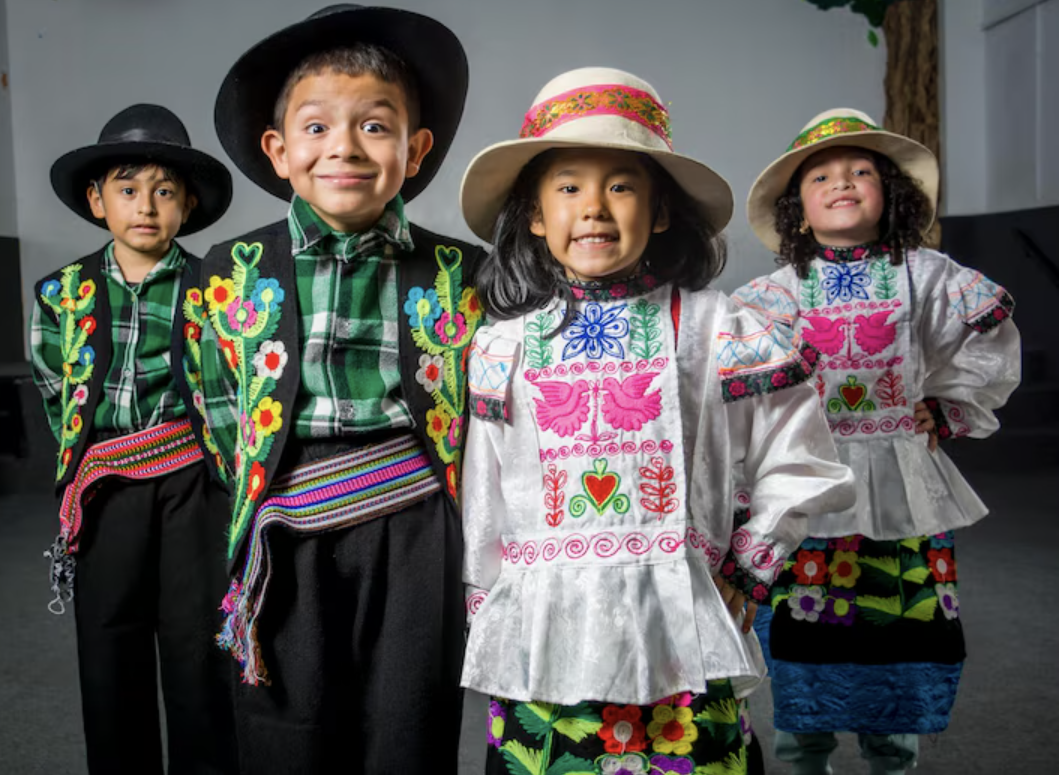
The Story Behind My Clothes

What is this project about?

In this vibrant and creative project, students aged 6 to 13 will explore how clothing reflects culture, beliefs, identity, and personal or collective history. Through visual storytelling and peer exchange with a partner class in another country, they will learn to appreciate cultural expressions through garments. The project encourages pride in one’s heritage and curiosity about others through interactive, age-appropriate, and joyful activities—culminating in a virtual multicultural fashion show

Age group
6-8, 9-12, 13-15
Project Duration
4 weeks
Language
English, Spanish, Danish

Learning Outcomes

  1. Understand how clothing can communicate culture, beliefs, or identity.
  2. Explore similarities and differences in traditional, festive, and everyday wear around the world.
  3. Develop skills in intercultural communication and multimedia storytelling.
  4. Foster respect and empathy by appreciating diverse expressions of self through dress.

Evaluate

Skills to develop

Intercultural Communication
Global Awareness
Collaboration & Teamwork
Collaboration
Digital Literacy

Project Timeline

1
Week 1

Presentation

Phase:Presentation & Dissemination

Step 1: Engage – Curiosity Ignited

  • Teachers introduce the project by explaining its purpose and guiding students to explore the topic.
  • Present a brief video featuring children from different parts of the world wearing traditional or festive clothing. Make sure the video is visually engaging and respectful of cultural diversity.
  • Ask the following questions:
    1. "What makes certain clothing special to you?"
    2. "What clothes do we wear on special days and why?"
  • Invite students to share their experiences with special clothing and its significance in celebrations. Encourage them to reflect on the personal meaning of their attire.
  • Share the questions on the platform's board so everyone can participate and share their answers, both among themselves and with international peers, fostering cultural exchange.

Step 2: Explore – Local Discovery
  • Students bring or draw a piece of clothing that holds special meaning for them (for example, a family tradition, a celebration, or a symbol of their cultural identity).
  • The class then creates a "Digital Story Portfolio," where each item is described with photos, illustrations, and brief captions.

Step 3: Explain – Storytelling & Exchange
  • In their portfolio, they include a brief explanation for each piece of clothing they’ve chosen, using the phrase:
"This piece of clothing is special to me because..."
  • This portfolio is shared on the platform's board so that international peers can leave comments and engage in cultural exchange.

Step 4: Elaborate – Virtual Intercultural Fashion Show
  • Both classes select the most representative pieces from their portfolios, highlighting those that have special meaning, to include them in a multicultural fashion show.
  • Students from both classes co-create a virtual fashion show. In teams, they present the selected outfits, showcasing them as if it were a fashion runway.
  • Each team records a video presenting the outfits, accompanied by a brief narration explaining the story behind the chosen piece of clothing. The garments can be traditional, celebratory, creative designs, or symbolic representations. If students do not have access to actual clothing, they can design them using materials like paper, cardboard, or recycled materials.
  • The video must be shared on the platform’s board so that classmates and international peers can view and comment on it.
  • To conclude, a voting session is organized with fun and meaningful categories such as:
    1. Most creative design
    2. Most significant story
    3. Most festive outfit

Step 5: Evaluate – Reflect and Celebrate
  • Coordinate with the partner class to schedule a date for the virtual meeting where students will share their outfits and cultural stories.
  • Create a session plan that ensures all students have an equal opportunity to present their outfits, describe their significance, and engage with their international peers.
  • Moderate a discussion where students share:
    1. The similarities and differences they observed in the outfits presented by their international peers.
    2. How these outfits reflect cultural identity, family traditions, or celebrations.
    3. The most surprising or interesting aspects they discovered about the clothing choices.
  • Encourage students to share how this experience helped them understand their international peers better, and how learning about different cultural garments broadened their perspective.
  • Write down key ideas and insights shared during the discussion on the platform’s board to continue the conversation and provide a space for further reflection after the meeting.

Assessment and reflection ✍️


Assessment
  • Evaluate student participation in research and presentation.
  • Assess quality of digital content creation.
  • Observer student interaction during virtual exchanges.
  • Evaluate students on respectful engagement with peers' cultural practices.
  • Consider assessing their ability to identify and analyze similarities and differences between cultures.
Reflection
  • Guide students to reflect on how learning about clothing from different cultures has deepened their understanding of identity and diversity.
  • Encourage them to journal or voice-record their thoughts on questions such as:
    1. What was one clothing story from another culture that stood out to you? Why did it interest or move you?
    2. Did you see any similarities between your clothing traditions and those from your partner class?
    3. How do you think clothes can help people express who they are or what they believe in?
  • Students can also reflect through drawing:
“Draw yourself wearing something that tells your own story.”
  • To close, invite them to share one thing they learned about their own culture and one thing they appreciate about another.

Teacher tips 💡


  • Foster a safe and inclusive learning environment that values diverse perspectives and experiences.
  • Provide clear guidelines and expectations for respectful communication and collaboration. We suggest you review the coexistence policies of Class2Class.org.
  • Facilitate the formation of diverse international teams, ensuring a mix of skills, backgrounds, and perspectives.
  • Provide scaffolding and support throughout the research and action planning process, offering guidance and resources as needed.
  • Encourage student agency and ownership of their learning, allowing them to drive the direction of their projects. 
  • Celebrate student achievements and facilitate meaningful reflection on their growth and the impact of their actions.

“The Story Behind My Clothes” is more than a project—it’s a celebration of identity, creativity, and cultural connection. By engaging students in playful, expressive, and meaningful collaboration, this project nurtures not only learning but friendship across borders. We invite you to bring this colorful and joyful journey into your classroom—and watch how a simple shirt, scarf, or festival dress can spark global understanding.

The Story Behind My Clothes - Class2Class | Class2Class