
The Sound of Well-Being

What is this project about?

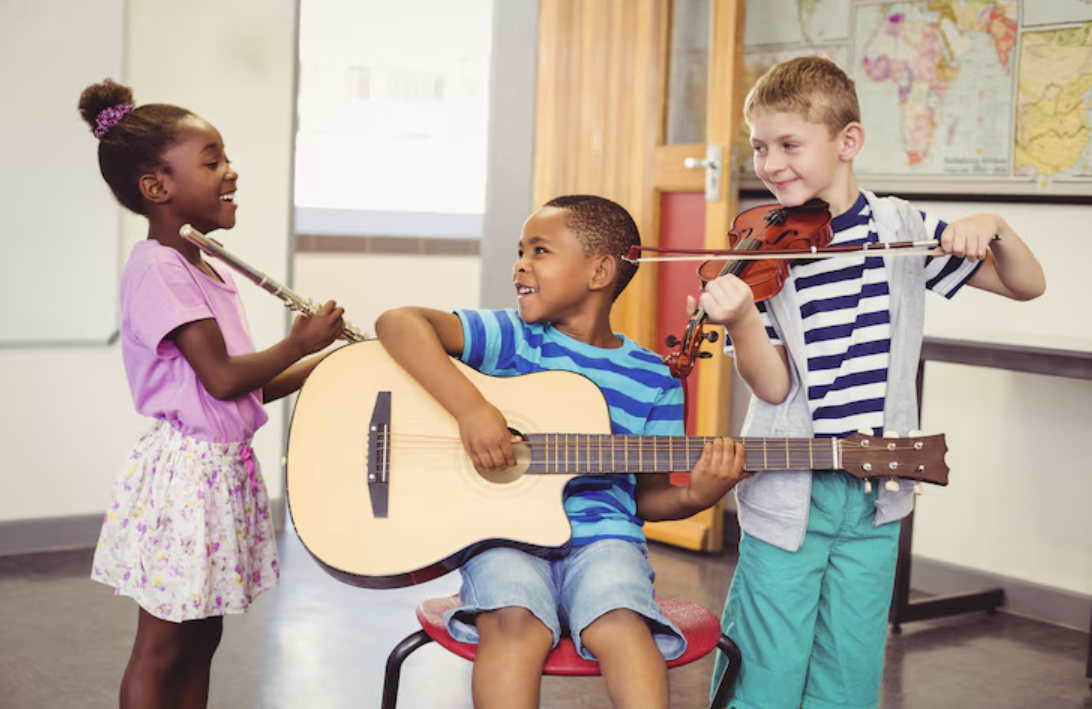
This project explores how music is used across cultures to support emotional well-being. Students from different countries will investigate and share how music helps them feel better, calm down, or express emotions. Through storytelling, audio diaries, and collaborative playlists, they will develop empathy, global awareness, and strategies for self-care while exploring mental health in age-appropriate ways.

Age group
6-8, 9-12, 13-15
Project Duration
4 weeks
Language
English, Spanish, Danish

This project contributes to the following global goals
Good Health and Well-being

Learning Outcomes

  1. Recognize how music can help us feel better and manage emotions.
  2. Explore how different cultures use music for emotional well-being.
  3. Improve listening and communication skills.
  4. Understand and appreciate how others live and feel in different parts of the world.
  5. Develop empathy and emotional awareness.
  6. Encourage emotional expression and self-care through music.

Evaluate

Skills to develop

Intercultural Communication
Critical Thinking & Problem-Solving
Global Awareness
Digital Literacy
Collaboration & Teamwork
Collaboration
Innovation

Project Timeline

1
Week 1

Presentation

Phase:Presentation & Dissemination

Step 1: Engage (Goal: Spark curiosity and establish relevance)

  • Introduce the project objectives to the students, ensuring they understand the goals and purpose.
  • Start with an icebreaker activity that allows students to introduce themselves to their international peers, using the platform’s board section.
  • Move into a class discussion with the question: “How does music make you feel?”
  • Share a story or video that shows how a child from another country uses music to express or manage emotions like sadness, anxiety, or joy.
  • Guide a reflective conversation with questions such as: “When do you usually listen to music? How does it help you?”
  • 🎯 Activity – "Emotional Music Faces": Invite students to draw themselves with music that reflects different emotions (happiness, tiredness, excitement, etc.).

Step 2: Explore (Goal: Encourage inquiry and cultural comparison)
  • Students record short audio or video journals where they talk about their favorite song and how it helps improve their mood.
  • Partner classrooms exchange these recordings and respond with “musical postcards”: drawings or notes that reflect their impressions and emotions after listening to the shared songs.
  • All materials are shared and discussed on the platform’s Board section.

Step 3: Explain (Goal: Deepen understanding and formalize learning)
  • Introduce key vocabulary related to emotions and mental well-being (e.g., calm, excited, nervous, joyful, safe, brave). Use visuals, gestures, and songs to reinforce meaning.
  • Lead a short guided reflection: “What emotions do I feel when I listen to certain types of music?” Use a color–emotion wheel or emoji chart.
  • Explore basic mental health concepts appropriate to the age group (e.g., “What helps us feel better when we are sad or anxious?”) and how music can be one of those tools.
  • Explore local traditions that use music for emotional connection or healing: lullabies, celebration songs, rhythms for rituals, or nature sounds.
  • Each student (or pair/group) prepares a short multimedia entry (drawing, video, or voice message) to answer:
    1. “What is one song or type of music from my culture that helps people feel better?”
    2. “How does it make me feel?”
  • Teachers help compile student contributions into a shared online gallery or slideshow.
  • Classes exchange and comment with kind feedback on their partners’ exhibitions, highlighting similarities and surprises.
  • ✨ Bonus Optional Add-ons: Create a class emotions playlist with songs that match different moods (happy, relaxed, strong, etc.).

Step 4: Elaborate (Goal: Apply learning in creative ways)
  • Mixed groups from both classrooms co-create a “Global Feel-Good Playlist” on Spotify or YouTube (with teacher support).
  • Students write their own “song for well-being” using instruments or body percussion.

Step 5: Evaluate (Goal: Reflect on learning and impact)
  • Organize a live session where both classes can connect to discuss their experiences and share insights gained from the project.
  • Facilitate a discussion in which students share the following:
    1. What did I learn about music and feelings?
    2. What did I learn from my partner class?
  • Encourage students to reflect on how this experience helped them better understand their international peers.
  • Record the key ideas and perspectives shared during the discussion on the platform’s board to continue the conversation and provide space for further reflection after the meeting.

Assessment and reflection✍️


Assessment
  • Focus on participation rather than perfection
  • Look for increased emotional vocabulary in student discussions
  • Notice improvements in students' willingness to express feelings
  • Observe growing curiosity about the partner classroom's culture
Reflection Activities
"Three things I learned" drawing or writing activity
"My favorite part" circle sharing time
Before and after emotional vocabulary check
Simple feedback forms with emojis for younger students

Teacher tips 💡


  • Foster a safe and inclusive learning environment that values diverse perspectives and experiences.
  • Provide clear guidelines and expectations for respectful communication and collaboration. We suggest you review the coexistence policies of Class2Class.org.
  • Facilitate the formation of diverse international teams, ensuring a mix of skills, backgrounds, and perspectives.
  • Provide scaffolding and support throughout the research and action planning process, offering guidance and resources as needed.
  • Encourage student agency and ownership of their learning, allowing them to drive the direction of their projects.
  • Celebrate student achievements and facilitate meaningful reflection on their growth and the impact of their actions.

By bringing music and emotions into your classroom, you are not only opening hearts—you are connecting souls across borders. This project invites your students to listen more deeply, share more openly, and care more globally. Let the music play—and let their voices rise.

The Sound of Well-Being - Class2Class | Class2Class