
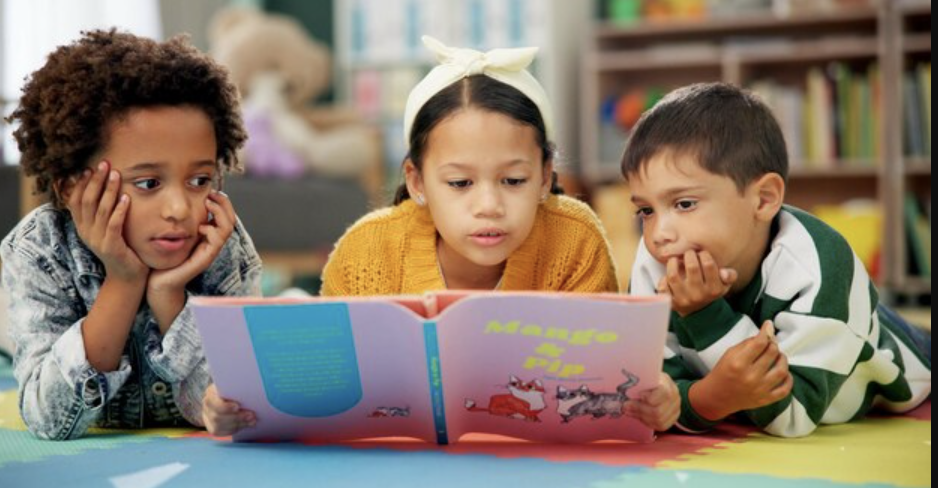
Stories for Change: Our Tales, Our World

What is this project about?

In this engaging project, students will explore how their favorite stories can teach us about making the world better. Working with international partners, they'll discover how adding new characters, plot twists, or endings to familiar tales can help us understand and share ideas about the Sustainable Development Goals (SDGs).

Age group
6-8, 9-12, 13-15
Project Duration
4 weeks
Language
English, Spanish, Danish

This project contributes to the following global goals
Quality Education

Learning Outcomes

  1. Connect familiar stories to global sustainability themes.
  2. Share cultural storytelling traditions with international peers.
  3. Develop creative thinking through story adaptation.
  4. Understand how stories can inspire positive change.
  5. Learn to collaborate across cultures.

Evaluate

Skills to develop

Intercultural Communication
Critical Thinking & Problem-Solving
Global Awareness
Digital Literacy
Collaboration & Teamwork
Collaboration

Project Timeline

1
Week 1

Presentation

Phase:Presentation & Dissemination

Step 1: Our stories, our world

  • Introduce the project objectives to the students, ensuring they understand the goals and purpose.
  • Students bring their favorite books or a written version of their favorite stories to class.
  • In groups, they share what they like about these stories and why they consider them special.
  • They then create digital cards highlighting the main ideas of their favorite stories.
  • These digital cards are posted on the project board section of the Class2Class.org platform so that students from the partner class can review them.
  • Interaction is encouraged by inviting students to comment and respond to their peers’ posts.
  • A brief introduction to the concept of the Sustainable Development Goals (SDGs) and their significance is provided.
  • Through guiding questions, students explore connections between their stories and the SDGs or imagine how they could adapt their stories to address one or more of these goals.

Step 2: The magic of storytelling
  • Form teams of four students.
  • Each team selects one of the shared stories to transform and connect it to one or more Sustainable Development Goals (SDGs). To achieve this, they can:
    1. Create new characters.
    2. Modify the beginning, middle, or end of the story.
    3. Adapt key events to reflect real-world challenges.
    4. Integrate SDG-related themes and solutions.
    5. Illustrate scenes from their new version.
    6. Practice storytelling by rehearsing their adapted versions.
  • Teams collaborate to creatively transform their chosen story.
  • Once finalized, they upload their revised story as a Word document to the project board on the platform.
  • Encourage students to provide friendly and constructive feedback on their peers' work, fostering an interactive and supportive learning environment.

Step 3: Sharing our new tales
  • Organize a live session where both classes can connect to discuss their experiences and share insights gained from the project.
  • Have students share their presentations.
  • Include an interactive segment, such as a Q&A or brainstorming activity, to promote dialogue and mutual understanding.
  • Conclude the session by recognizing student contributions. 

Assessment and reflection ✍️


  • Evaluation Criteria for Participation:
    • Active participation in video calls with international peers.
    • Regular contributions to discussions on the project board.
  • Final Evaluation Criteria
    • Quality of final presentations – Clarity, organization, and creativity in conveying key ideas.
    • Depth of connection between the book’s theme and the identified SDGs – Relevance and insightfulness in linking the story to sustainability goals.
    • Level of intercultural engagement – Active participation in discussions, exchanges, and collaboration with international peers.
    • Presentation of individual reflections – Thoughtfulness and depth of personal insights shared.
  • Reflection Activities
    • Project journal – Students document their learning journey, key insights, and personal growth.
    • Group discussion on the learning process – A collaborative space to share experiences, challenges, and discoveries.
    • Final reflection on cultural perspectives gained – Encouraging students to analyze how the project broadened their understanding of different cultures and sustainability.

Teacher tips 💡


  • Foster a safe and inclusive learning environment that values diverse perspectives and experiences.
  • Provide clear guidelines and expectations for respectful communication and collaboration. We suggest you review the coexistence policies of Class2Class.org.
  • Facilitate the formation of diverse international teams, ensuring a mix of skills, backgrounds, and perspectives.
  • Provide scaffolding and support throughout the research and action planning process, offering guidance and resources as needed.
  • Encourage student agency and ownership of their learning, allowing them to drive the direction of their projects. 
  • Celebrate student achievements and facilitate meaningful reflection on their growth and the impact of their actions.