
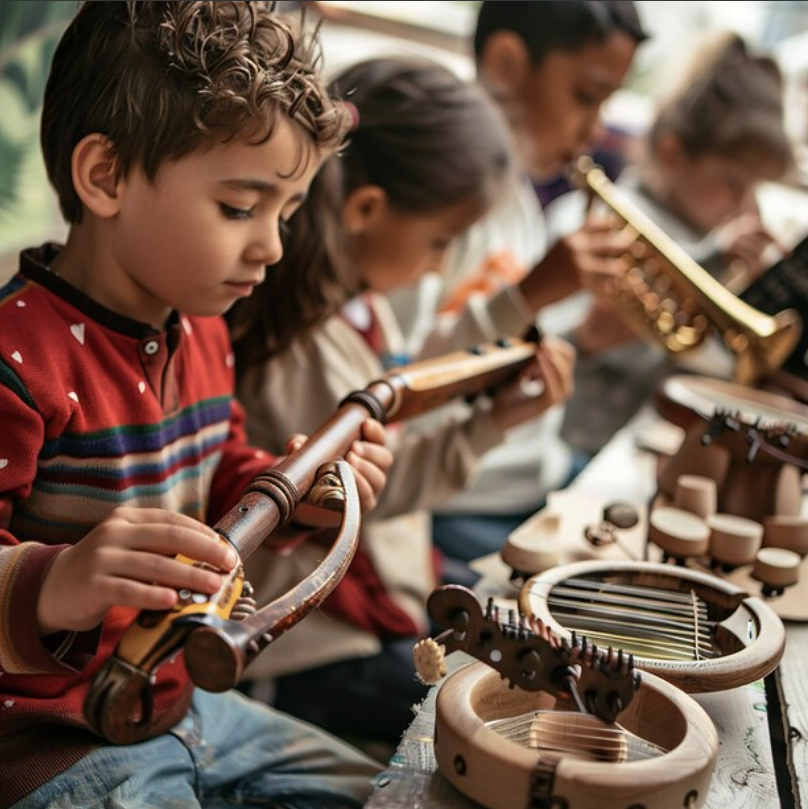
Rhythms Around the World: Exploring Traditional Music Instruments

What is this project about?

In this project idea, students from different countries will explore and share their traditional musical instruments, creating a virtual symphony of cultures. Through collaborative activities, they'll learn about diverse musical traditions and the cultural significance of music worldwide.

Age group
6-8, 9-12, 13-15
Project Duration
4 weeks
Language
English, Spanish, Danish

Learning Outcomes

  • Identify and describe traditional musical instruments from their own country and those of their international peers.
  • Recognize and explain the cultural significance of specific instruments from their country.
  • Recognize similarities and differences in musical traditions across cultures.
  • Develop appreciation for diverse musical expressions and their role in cultural identity.
  • Improve communication and collaboration skills through international peer interaction.

Evaluate

Skills to develop

Intercultural Communication
Global Awareness
Collaboration & Teamwork
Collaboration
Digital Literacy

Project Timeline

1
Week 1

Presentation

Phase:Presentation & Dissemination

Step 1: Introduction and exploration

  • Use the "Connect" section to find a partner class.
  • Create the project and invite your partner class.
  • Teachers introduce the project and its objectives to their students.
  • Students research traditional instruments from their own culture.

Step 2: Collaborative activity
  • Forms students in teams.
  • Students select a traditional instrument to research its history and, if possible, record sound clips or live demonstrations.
  • Students work together to create a collaborative digital "Music Map" showcasing the instruments they've learned about.
  • Guide students to create digital information cards for each instrument they've learned about. Information cards should include:
    • Name of the instrument
    • A clear image or illustration
    • Country/region of origin
    • Brief description (2-3 sentences)
    • Interesting fact
    • If possible, a short audio clip of the instrument

Step 3: Sharing and reflection
  • Organize a virtual meeting between classes.
  • Pupils present their findings on the traditional instrument from their country.
  • Pupils take part in a question and answer session to deepen their understanding and curiosity about the traditional instrument.
  • They discuss similarities and differences between instruments from different cultures.
  • Students reflect on what they've learned about different musical traditions.

Assessment and reflection ✍️


  • Create a simple rubric to evaluate students' presentations, focusing on content accuracy, clarity of explanation, and engagement with peers.
  • Use the collaborative Music Map as a portfolio of student learning, assessing their contributions and understanding of cultural contexts.
  • Reflect with the students on their favorite discoveries about the history of the musical instruments they selected and how the project has shifted their perspective on global music.

Teacher tips 💡


  • Foster a supportive and inclusive learning environment that values diverse perspectives and experiences.
  • Provide clear guidelines and expectations for respectful communication and collaboration. We suggest you review the coexistence policies of Class2Class.org.
  • Use simple language and visual aids when explaining project steps to younger students.
  • Be prepared to assist with technology use, especially for the younger age group.
  • Celebrate small discoveries to keep students motivated throughout the project.