
Once Upon Our World: Children's Stories Across Cultures
What is this project about?
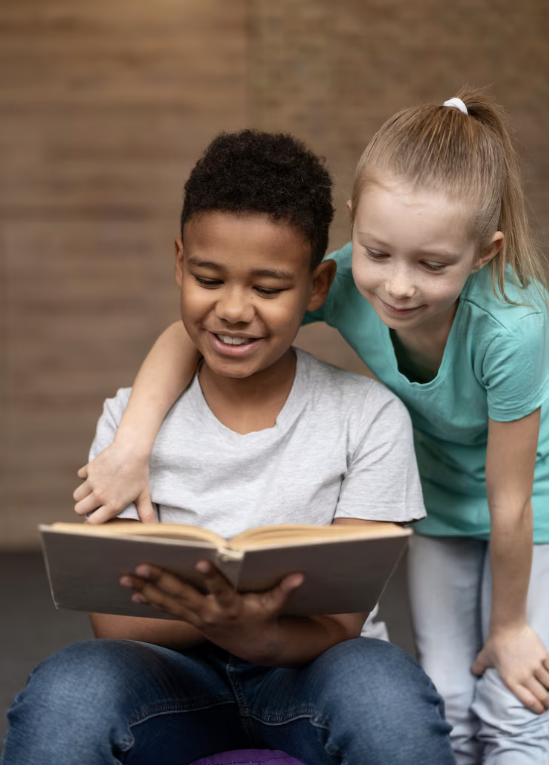
In this cross-cultural exchange, students from different countries will share their favorite traditional or contemporary children's stories that are meaningful in their communities. Through storytelling, illustration, and dialogue, students will explore the cultural values, themes, and morals embedded in children's literature around the world. The project emphasizes empathy, respect for diversity, and the universal power of storytelling.
- Age group
- 6-8, 9-12, 13-15
- Project Duration
- 4 weeks
- Language
- English, Spanish, Danish
Learning Outcomes
Students will:
- Identify key elements of stories from their own and other cultures.
- Understand how stories reflect cultural values, traditions, and everyday life.
- Develop communication, listening, and intercultural empathy skills.
- Build confidence in storytelling, presentation, and collaboration.
- Reflect on the similarities and differences between their cultural narratives.
Evaluate
Skills to develop
Intercultural Communication
Critical Thinking & Problem-Solving
Global Awareness
Digital Literacy
Collaboration & Teamwork
Collaboration
Project Timeline
1
Week 1
Presentation
Phase:Presentation & Dissemination
Step 1: Engage
- Teachers introduce the project by explaining its purpose and guiding students to explore the topic.
- Introduce the project with a storytelling activity. The teacher reads a beloved local tale.
- Students discuss: What makes a story special? What stories do we love at home or school?
- Teachers connect with partner classrooms via Class2Class.org and share a brief video greeting.
Step 2: Explore
- Each class selects one or two stories that represent their culture.
- Students present their stories to international peers using one or more of the following formats:
- Illustrated scenes from the story
- Summary of the plot
- Dramatization or acting out the story
- Classes exchange their stories in the board section through creative formats such as:
- Illustrated storyboards
- Digital stories (videos, slideshows) or photo albums
Step 3: Explain
- Teachers guide students in comparing:
- Characters (heroes, animals, family roles)
- Settings (villages, forests, cities)
- Messages or morals
- Partner classrooms discuss: What values or lessons do our stories share?
- Share your comments on the project board.
Step 4: Elaborate
- Review the stories received from the partner classroom together with your students.
- Each teacher facilitates a class discussion to reflect and decide:
- Character: (e.g., wise girl, magical tiger)
- Setting: (e.g., forest, mountain, desert)
- Conflict: (e.g., lost in nature, saving a village)
- Names of characters or places
- Traditional foods
- Customs or traditions
- Each class shares their choices on the project board and plans how they will collaborate in writing the story.
- Each class works on the part of the story assigned to them.
- If students are younger, they can use drawings, pictograms, or visual diagrams to express their ideas.
- Exchange drafts using the project board to review progress and provide feedback.
- Teachers collaborate to compile and edit the complete story using tools such as:
- Book Creator, Canva or Google Slides.
- Optional: Each class can create illustrations for the main scenes of their assigned section of the story.
Step 5: Evaluate
- Agree with the partner class on a date and time to share the completed story.
- Organize students to present:
- Their part of the story (text, illustrations, recordings).
- A short explanation of their contribution (characters, setting, cultural elements).
- During the Meeting
- Present the full story, section by section (can be read aloud, acted out, or shown as a video).
- Lead a discussion using questions like:
- What cultural elements from each country are reflected in the story?
- What similarities and differences did you notice in the ideas?
- What part of the story did you find most creative or surprising?
- Ask students to share:
- What did they learn about their peers from the other country?
- How did this project change their view of other cultures or storytelling?
- Write down key reflections and comments on the project board to continue the conversation after the meeting.
Assessment and reflection ✍️
Assessment
- Participation and collaboration during planning, drafting, and discussions.
- Creative expression through drawings, character design, or illustrations.
- Contribution to class discussions about cultural elements and story choices.
Reflection
- Use simple, open-ended prompts to guide student reflection:
- “What surprised you about the story from the other class?”
- “What do our two stories have in common?”
- “What did you learn about your partner class’s culture through the story?”
- “Which character or scene from the shared story was most meaningful to you? Why?”
- Optional formats for reflection:
- Journals or audio recordings answering the above prompts.
- Drawings that respond to:
- “Draw yourself as a character in the story, adding something from your own culture.”
- “Draw the scene that best shows both cultures working together.”
- Invite each student to share:
- One thing they learned about their own culture.
- One thing they appreciate or admire about the other culture.
Teacher tips 💡
- Foster a safe and inclusive learning environment that values diverse perspectives and experiences.
- Provide clear guidelines and expectations for respectful communication and collaboration. We suggest you review the coexistence policies of Class2Class.org.
- Facilitate the formation of diverse international teams, ensuring a mix of skills, backgrounds, and perspectives.
- Provide scaffolding and support throughout the research and action planning process, offering guidance and resources as needed.
- Encourage student agency and ownership of their learning, allowing them to drive the direction of their projects.
- Celebrate student achievements and facilitate meaningful reflection on their growth and the impact of their actions.
“Once Upon Our World” is more than a story-sharing project — it’s a bridge of understanding. Through the magic of storytelling, students will discover not only new worlds, but the shared values that unite us all. Let your classroom become a library of global voices — and watch your students become storytellers of empathy, curiosity, and connection.