
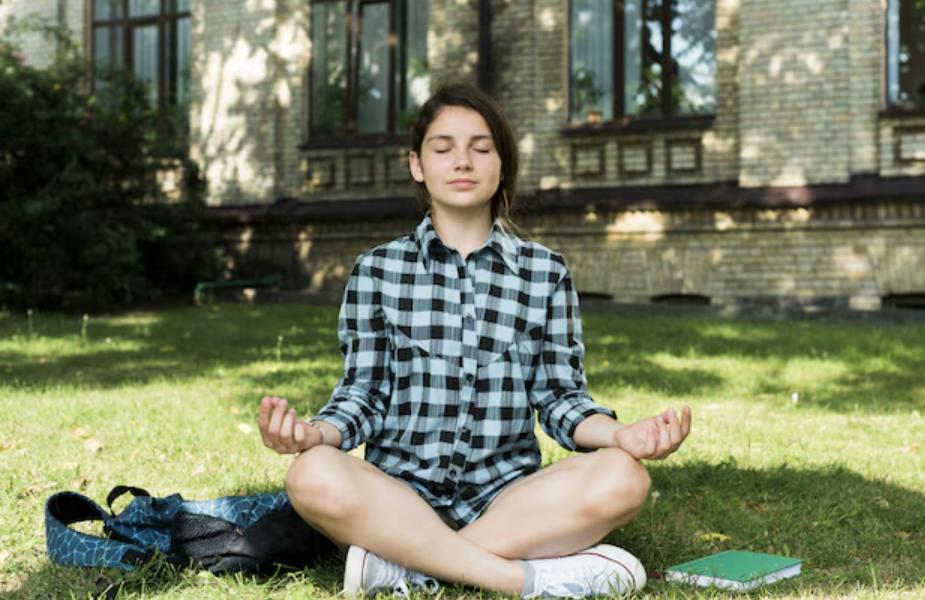
Mindful Moments: Sharing Global Wellness Practices

What is this project about?

“Mindful Moments" is a collaborative project where students from different countries explore and share simple mental wellness practices from their cultures. They will work together to create a digital collection of these practices, making them accessible to young people worldwide.

Age group
13-15, 16-18, 18+
Project Duration
4 weeks
Language
English, Spanish, Danish

This project contributes to the following global goals
Good Health and Well-being

Learning Outcomes

  1. Understand the importance of mental health in overall well-being.
  2. Discover and share cultural practices that support mental wellness.
  3. Develop digital communication skills through international collaboration.
  4. Create practical, youth-friendly mental health resources.

Evaluate

Skills to develop

Intercultural Communication
Critical Thinking & Problem-Solving
Global Awareness
Digital Literacy
Collaboration & Teamwork
Critical Thinking & Problem-Solving
Adaptability & Leadership
Collaboration
Innovation
Emotional Intelligence

Project Timeline

1
Week 1

Presentation

Phase:Presentation & Dissemination

Step 1: Empathize 
a) Introduction: 

  • Start the class by briefly explaining World Mental Health Day and its importance.
  • Introduce the project and its objectives.
  • Show a short video on mental health. 
  • Ask students: "What does mental health mean to you?" 
  • Write key points on the board or a shared digital document.
b) Interview preparation:
  • Explain the homework: Students will interview a family member or community elder about traditional mental wellness practices.
  • Provide a handout with sample questions like:
    1. What activities do people in our culture do to relax or de-stress?
    2. Are there any traditional practices for improving mood or mental well-being?
    3. How do people in our community typically deal with feelings of sadness or anxiety?
c) International partner introduction: 
  • Use the Class2Class.org platform to introduce students to their international partners.
  • Have students post a brief introduction about themselves and their initial thoughts on mental health.
  • Use the board section on the Class2Class.org platform for students to introduce themselves to their international partners.
  • Ask the students to post a brief introduction about themselves and their initial thoughts on mental health.

Step 2: Define 
a) Interview Sharing: 
  • In pairs or small groups, have students share what they learned from their interviews.
  • Ask each group to list 3-5 wellness practices they found most interesting.
  • Using the Class2Class.org platform or a board virtual, have students share their findings with their international partners.
  • Ask students to identify mental health problems common to adolescents from both cultures.
b) Challenge selection:
  • In pairs or small groups, students should choose a mental health problem to focus on (e.g. stress, anxiety, loneliness) to directly impact with a solution. 

Step 3: Ideate
a) Brainstorming: 
  • Introduce basic brainstorming rules: no idea is bad, quantity over quality, build on others' ideas.
  • Ask the groups or pairs to brainstorm how their discovered wellness practices could address the mental health issue they have chosen.
  • Have them list at least 10 ideas.

b) Practice selection:
  • Guide the students to evaluate their ideas based on criteria such as effectiveness, ease of application, and cultural significance.
  • Each pair or group should select one practice from their culture to further develop.

c) Concept development:
  • The students begin outlining their chosen practices, considering:
    • How is it performed?
    • How does it benefit mental health?
    • Any cultural context or history?

Step 4: Prototype 
a)Tool introduction:
  • Demonstrate how to use a simple design tool like Canva (https://www.canva.com/).
  • Show examples of infographics or posters about mental health.
b) Guide creation: 
  • Each pair or group creates a digital guide explaining the two chosen practices.
  • Guide should include:
    1. Title of the practice
    2. Step-by-step instructions
    3. Benefits for mental health
    4. Cultural background (if relevant)
    5. Visuals (illustrations or photos)
  • Ask the students to post their work in the board section of the Class2Class.org platform so that their partner classmates can view it.

Step 5: Test  
a) Review:
  • Ask students to review the other teams' guides.
  • Provide a feedback form with questions like:
    • Is the guide clear and easy to understand?
    • Does it explain the mental health benefits well?
    • What's one thing you really like about this guide?
    • What's one suggestion for improvement?
b) Refinement:
  • Teams review feedback and improve their guides.

Step 6: Presentation
  • The classes that have been associated with the project are brought together in a video call. 
  • Provide clear guidelines for respectful intercultural communication. 
  • Each class should present their mental health guides.

Assessment and reflection ✍️


  • Participation and collaboration:
    • Create a simple checklist to track student engagement during the project:
      • Active participation in class discussions .
      • Contribution of ideas to the team.
      • Respectful interaction with peers from different cultures.
      • Initiative in researching and sharing wellness practices.
    • Use this checklist during project activities to note student behaviors.
    • Consider setting up a point system (e.g., 1-5 scale) for each item to quantify participation.
  •  Digital guide evaluation:
    • Develop a rubric to assess the students' digital guides on wellness practices:
      • Clarity: Is the information easy to understand? (1-5 points)
      • Creativity: How original and engaging is the presentation? (1-5 points)
      • Effectiveness: Does it clearly explain the wellness practice and its benefits? (1-5 points)
      • Cultural Context: Is the practice well-connected to its cultural background? (1-5 points)
  • Share this rubric with students before they start creating their guides.
  • Use the Class2Class.org platform to share and evaluate these digital guides.
  • Final Reflection:
    • Provide students with reflection prompts to guide their final thoughts:
      • What new things did you learn about wellness practices from other cultures?
      • How has your understanding of global well-being changed through this project?
      • What surprised you most about working with international peers?
      • How might you incorporate some of these practices into your own life?

Teacher tips 💡


  • Create a supportive classroom environment where students feel safe to express themselves creatively and discuss mental health openly.
  • Be prepared to provide emotional support or resources if students share personal experiences related to mental health during the project.
  • Foster a supportive and inclusive learning environment that values diverse perspectives and experiences.
  • Provide clear guidelines and expectations for respectful communication and collaboration. We suggest you review the coexistence policies of Class2Class.org.