
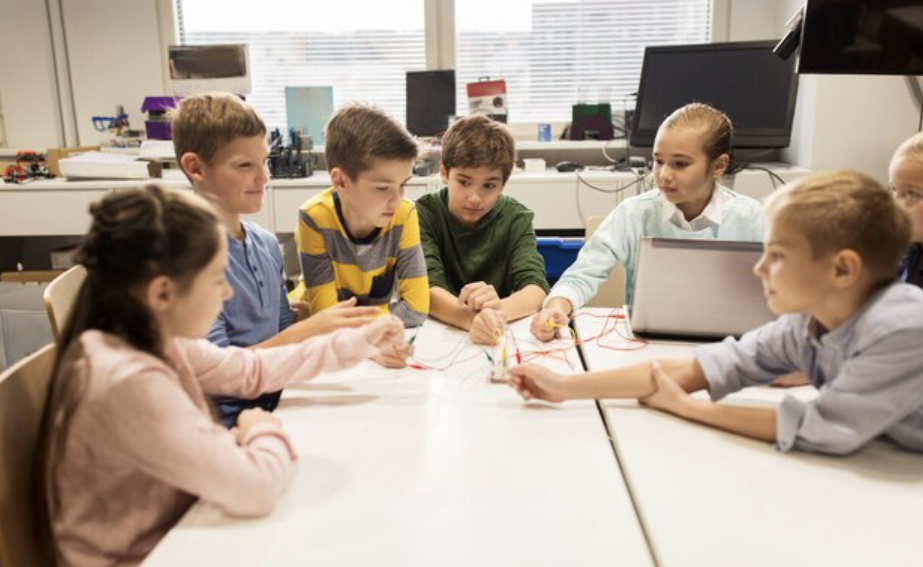
Embracing Diversity: Building a Tolerant School Community

What is this project about?

Students will work collaboratively to identify and address issues of intolerance within their school community. Using design thinking, they'll develop and implement innovative solutions to promote understanding, respect, and acceptance among their peers.

Age group
6-8, 9-12, 13-15
Project Duration
4 weeks
Language
English, Spanish, Danish

This project contributes to the following global goals
Peace and Justice Strong Institutions

Learning Outcomes

  • Understand the concept of tolerance and its importance in a diverse society.
  • Develop empathy and appreciation for different perspectives and backgrounds.
  • Apply design thinking to solve real-world problems related to intolerance.
  • Enhance critical thinking, communication, and teamwork skills.
  • Create and implement actionable solutions to promote tolerance in their school.

Evaluate

Skills to develop

Intercultural Communication
Critical Thinking & Problem-Solving
Digital Literacy
Adaptability & Leadership
Critical Thinking & Problem-Solving
Innovation
Global Awareness
Collaboration
Collaboration & Teamwork
Emotional Intelligence

Project Timeline

1
Week 1

Presentation

Phase:Presentation & Dissemination

Step 1: Empathize

  • Use the "Connect" section to find a partner class.
  • Create the project and invite your partner class.
  • Together with students, conduct surveys and create an interview script to identify issues related to intolerance.
  • Guide students to interview peers and teachers at their schools about their experiences with intolerance.
  • Share the results with your international partners using the collaboration board on the platform.
  • Use the group chat feature to discuss the survey results.

Step 2: Define
  • Analyze the data collected from both schools.
  • Guide students in identifying recurring issues.
  • Students can create mind maps of common problems. They can share the mind map on the collaboration board on the platform.
  • Define a specific problem statement related to intolerance in their school communities.
  • Teach students how to draft a problem statement: "How might we...?" Example:
    • How might we foster greater understanding and respect among students from different cultural backgrounds in our school?
    • How might we create safe spaces for students to share their experiences of discrimination without fear of retaliation?
  • Use the project board to post and vote on the most pressing issues.

Step 3: Ideate
  • Brainstorming possible solutions.
  • Encourage crazy ideas and build on each other's suggestions.
  • Students write their ideas on virtual sticky notes on the shared board.
  • Motivate students to build on others' ideas by adding notes or comments.
  • Evaluate and select the most promising ideas.
  • Create a matrix on the shared board with the following:
    • Feasibility (Easy to implement --- Difficult to implement)
    • Impact (Low impact --- High impact)
  • Guide students to vote for one solution and explain their reasons for selecting certain ideas. Some examples of solutions:
    • Recognition Program. Implement a recognition system that rewards students for acts of tolerance, inclusion, and kindness.
    • Diversity Gallery.Create an ongoing virtual art exhibition that celebrates diversity and promotes tolerance through students' artistic expressions.

Step 4: Prototype
  • Develop a prototype of the chosen solution (e.g., recognition program).
  • Guide students to create simple and tangible representations of their ideas.
  • These could be drawings or digital models to share with classmates.
  • Use free online tools like Canva.
  • Encourage students to create step-by-step guides for implementing their ideas.

Step 5: Testing and implementation
  • Students present the prototypes to their peers.
  • Gather feedback and refine the solution.
  • Guide students in analyzing feedback constructively.
  • Make improvements based on input from peers and teachers.

Step 6: Final presentation
  • Schedule a video conference for students to present their proposal to the partner class.
  • Provide feedback and congratulate the students on their great work.
  • Document the process with photos and videos to share on the platform.

Assessment and reflection ✍️


  • Conduct pre and post-project surveys to measure changes in attitudes towards tolerance
  • Encourage students to write reflective journal entries at each stage of the project, sharing insights with their international partners.
  • Set up a dedicated space on the project board for reflection posts.

Teacher Tips 💡


  • Foster a collaborative and inclusive environment where all students feel valued and empowered to contribute their ideas and talents.
  • Provide clear guidelines and expectations for respectful communication and collaboration. We suggest you review the coexistence policies of Class2Class.org.
  • Celebrate student successes and achievements throughout the project to maintain engagement and motivation.