Blue Horizons: Designing Innovative Strategies for Ocean Conservation
What is this project about?
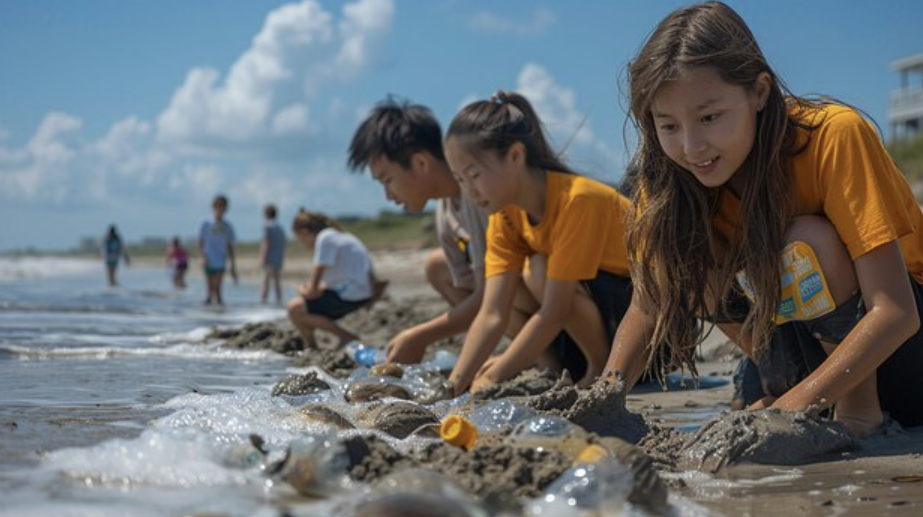
"Blue Horizons" is an immersive and collaborative project that engages students aged 13-19 from around the world in the critical mission of protecting and preserving our planet's oceans. By employing the design thinking methodology, students will explore the challenges facing marine ecosystems, empathize with stakeholders, and work together to develop innovative solutions for marine conservation.
- Age group
- 13-15, 16-18, 18+
- Project Duration
- 4 weeks
- Language
- English, Spanish, Danish
This project contributes to the following global goals
Learning Outcomes
- Understand the importance of oceans in maintaining the ecological balance and supporting human well-being.
- Apply the design thinking process to investigate marine conservation challenges and develop effective solutions.
- Develop empathy, critical thinking, collaboration, and problem-solving skills through global partnerships.
- Foster a sense of global citizenship and shared responsibility for the protection and sustainable use of ocean resources.
- Inspire students to take action and become advocates for marine conservation in their communities and beyond.
Evaluate
Skills to develop
Intercultural Communication
Critical Thinking & Problem-Solving
Global Awareness
Digital Literacy
Collaboration & Teamwork
Adaptability & Leadership
Critical Thinking & Problem-Solving
Collaboration
Emotional Intelligence
Project Timeline
1
Week 1
Presentation
Phase:Presentation & Dissemination
Step 1: Empathize
- Students form international teams and engage in empathy-building activities to understand different perspectives on ocean conservation issues.
- Teams conduct virtual interviews, surveys, and research to gather insights into the needs, challenges, and aspirations of marine communities, scientists, policymakers, and the general public.
- Students create empathy maps, user personas, or storytelling exercises to synthesize their findings and develop a deep understanding of the human dimensions of marine conservation.
Step 2: Define
- Teams analyze the insights gathered during the empathize phase to identify key problems and opportunities related to marine conservation.
- Students collaborate to frame problem statements, define project goals, and establish success criteria for their marine conservation solutions.
- The teams develop a plan for their solution project in which they outline their area of interest, the target audience, and the desired impact.
Step 3 : Ideate
- Teams engage in brainstorming sessions, ideation workshops, and creative problem-solving activities to generate a wide range of potential solutions for their identified marine conservation challenges.
- Students collaborate in exercises to explore innovative ideas and concepts.
- Teams evaluate and refine their ideas based on feasibility, impact, and alignment with the needs and insights gathered during the empathize phase.
Step 4: Prototype
- Teams select their most promising solutions and develop tangible prototypes or mockups to test and validate their ideas.
- Students collaborate to create physical or digital models, simulations, or interactive experiences that demonstrate the key features and functionality of their marine conservation solutions.
- Teams engage in rapid prototyping, user testing, and iterative refinement to improve their designs based on feedback and insights.
Step 5: Test
- The teams conduct virtual trial sessions or pilot projects to assess the effectiveness and impact of their marine conservation solutions.
- Students engage with target audiences, experts, or stakeholders to gather feedback, validate assumptions, and assess the feasibility of their solutions in real-world contexts.
- Teams analyze the results of their testing phase and identify areas for improvement or further iteration.
Step 6: Implement and reflect
- The teams finalize their marine conservation solutions based on the ideas and feedback collected during the testing phase.
- The teams present their final solutions and reflect on their learning journey, the potential impact of their work, and the importance of collaboration in solving problems for marine conservation.
Assessment and reflection ✍️
- Assessment criteria. Innovation in solutions, effectiveness of communication, teamwork, and engagement with global perspectives on sustainability.
- Reflection activity. Students create a digital diary or vlog series documenting their journey, learnings, challenges, and how they plan to continue their advocacy for sustainability.
Teacher tips 💡
- Foster a safe and inclusive learning environment that values diverse perspectives and experiences.
- Provide clear guidelines and expectations for respectful communication and collaboration. We suggest you review the coexistence policies of Class2Class.org.
- Encourage creativity and open-mindedness, stressing that all ideas have value in brainstorming sessions.
- Facilitate connections with experts, activists, or organizations that can provide real-world insights into sustainability challenges and solutions.
- Offer continuous support and feedback, helping students refine their projects and presentations for the global showcase.
By participating in this project, your students will embark on a transformative journey of empathy, collaboration, and innovation. Through the design thinking methodology, they will develop a deep understanding of marine conservation challenges, cultivate essential 21st-century skills, and become empowered to create meaningful solutions for the protection of our oceans.