
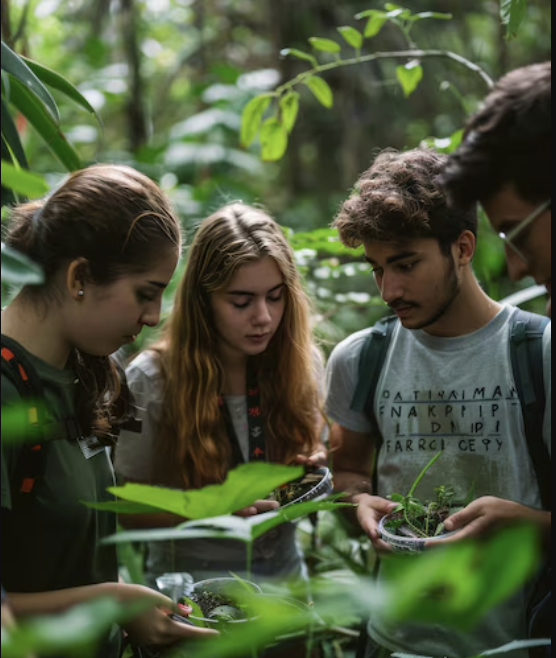
Biodiversity Explorers

What is this project about?

"Biodiversity Explorers" is a project aimed at inspiring a new generation of environmental stewards and fostering a deep appreciation for the rich tapestry of life on our planet.

Age group
13-15, 16-18, 18+
Project Duration
4 weeks
Language
English, Spanish, Danish

This project contributes to the following global goals
Life on Land

Learning Outcomes

  1. Understand the concept of biodiversity and its vital role in maintaining healthy ecosystems and human well-being.
  2. Develop critical thinking, problem-solving, and collaboration skills.
  3. Investigate real-world threats to biodiversity and explore sustainable solutions through collaborative research and analysis.
  4. Foster global awareness and intercultural understanding by working with international peers on conservation projects.
  5. Inspire students to take action and become advocates for biodiversity conservation in their communities and beyond.

Evaluate

Skills to develop

Intercultural Communication
Critical Thinking & Problem-Solving
Global Awareness
Digital Literacy
Collaboration & Teamwork
Adaptability & Leadership
Critical Thinking & Problem-Solving
Collaboration
Emotional Intelligence
Innovation

Project Timeline

1
Week 1

Presentation

Phase:Presentation & Dissemination

Step 1: Empathize

  • Teachers introduce the project and the significance of International Biodiversity Day.
  • Students form international teams and participate in biodiversity-themed icebreaker activities and quizzes to build empathy and understanding.
  • Teams engage in discussions and reflections on the importance of biodiversity and the challenges facing ecosystems worldwide.

Step 2: Define
  • Teams identify and select a specific threat to biodiversity or conservation challenge to address.
  • Students collaborate to investigate the problem, gather data, etc.
  • They define the problem statement (why the problem occurs) and the project objectives they will develop as a team.
  • Teams develop a plan to carry out their project outlining their goals, timelines, roles, and responsibilities.

Step 3: Ideate
  • Teams brainstorm and generate innovative ideas and potential solutions to address their selected conservation challenge.
  • Students participate in collaborative ideation sessions, mind mapping, and design thinking activities to explore creative approaches.
  • Teams evaluate and refine their ideas based on feasibility, impact, and alignment with project goals.

Step 4: Prototype
  • Teams develop prototypes or models of their proposed conservation solutions using collaborative online tools and platforms.
  • Students create wireframes, mockups, or simulations to visualize and test their ideas.
  • Teams engage in peer feedback and iterative improvements to refine their prototypes.

Step 5: Test
  • Teams present their prototypes and conservation solutions to a panel of experts, teachers, and peers for feedback and validation.
  • Students engage in virtual testing sessions, simulations, or pilot projects to assess the effectiveness and impact of their solutions.
  • Teams incorporate feedback and make final adjustments to their conservation action plans.

Step 6: Implement and reflect
  • Teams finalize their conservation action plans and prepare for implementation in their local communities.
  • Students create compelling presentations and pitch their solutions to relevant stakeholders and decision-makers.
  • Teams engage in reflection activities to evaluate their learning experience, personal growth, and the potential impact of their projects.

Collaborative activities
  • Collaborative research, data analysis, and ideation sessions using shared online platforms and tools.
  • Co-creation of prototypes, presentations, and action plans to showcase conservation solutions

Assessment and reflection ✍️


  • Rubrics to assess student participation, collaboration, and the quality of their research and presentations.
  • Reflective journal prompts to encourage students to think critically about their learning, personal growth, and the potential impact of their actions.
  • Peer and self-assessment opportunities to foster accountability and ownership of learning.

Teacher tips 💡


  • Provide guidance and support throughout the design thinking process, fostering a culture of collaboration and innovation.
  • Encourage students to embrace a growth mindset, learning from failures and iterations as they navigate complex conservation challenges.
  • Celebrate milestones and achievements throughout the project to maintain student motivation and engagement.
  • Facilitate meaningful discussions and reflections to help students connect their learning to real-world impact and personal growth.
  • Provide clear guidelines and expectations for respectful communication and collaboration. We suggest you review the coexistence policies of Class2Class.org.

By participating in "Biodiversity Explorers," your students will embark on a transformative journey of collaborative problem-solving and environmental stewardship. Through the structured design thinking process, they will develop critical skills, gain a deep understanding of biodiversity conservation, and become empowered to make a tangible difference in their communities and beyond.