
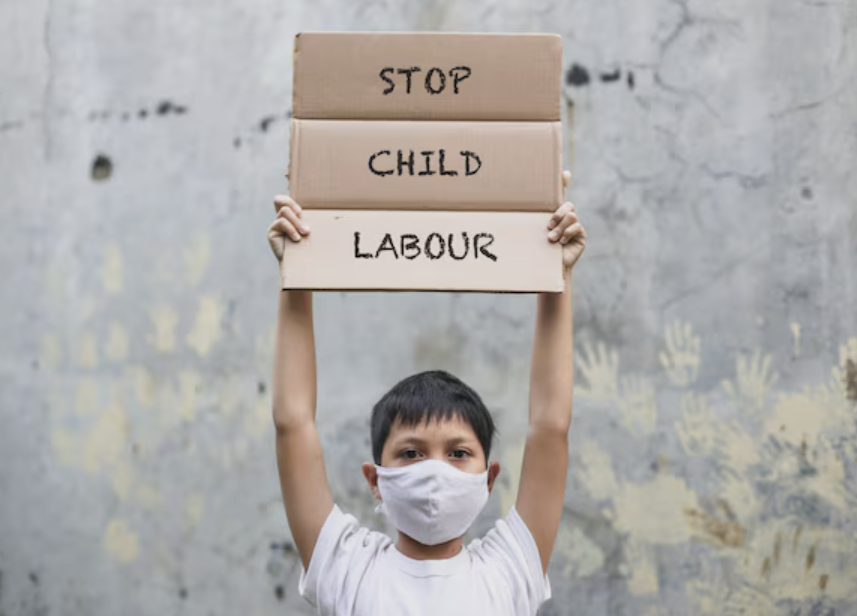
Advocates in Action: Uniting Youth to Combat Child Labor

What is this project about?

This project engages students aged 13-19 from around the world in a collaborative effort to combat child labor. Through the design thinking process, students will explore the complex issues surrounding child labor, develop empathy for those affected, and work together to create innovative solutions and awareness campaigns.

Age group
13-15, 16-18, 18+
Project Duration
4 weeks
Language
English, Spanish, Danish

This project contributes to the following global goals
Decent Work and Economic Growth

Learning Outcomes

  1. Understand the scope, causes, and consequences of child labor worldwide.
  2. Apply the design thinking process to investigate child labor issues and develop effective solutions.
  3. Enhance collaboration, communication, and problem-solving skills through global partnerships.
  4. Foster empathy, global citizenship, and a sense of responsibility towards social justice issues.

Evaluate

Skills to develop

Intercultural Communication
Critical Thinking & Problem-Solving
Global Awareness
Digital Literacy
Collaboration & Teamwork
Adaptability & Leadership
Critical Thinking & Problem-Solving
Collaboration
Emotional Intelligence

Project Timeline

1
Week 1

Presentation

Phase:Presentation & Dissemination

Step 1: Empathize

  • Teachers facilitate discussions and activities to help students understand the experiences of children engaged in labor.
  • Students conduct research, interviews, and empathy-building exercises to deeply understand the issues surrounding child labor.
  • Teacher supports students in synthesizing their findings and developing a deep understanding of the issue.

Step 2: Define
  • Teacher guides students in analyzing the insights gathered during the empathize phase to identify key problems and opportunities related to child labor.
  • Students collaborate to formulate the problem statement and define the objectives of the solution project they will undertake to solve the problem.
  • The teacher assists the students in creating a plan for the project they will carry out, where they describe their solution, the beneficiaries, and the desired impact.

Step 3: Ideate
  • Teacher facilitates brainstorming sessions and ideation workshops to generate potential solutions for combating child labor.
  • Students collaborate through virtual platforms to explore innovative ideas and concepts.
  • Teacher encourages students to think creatively and pushes them to consider diverse perspectives and approaches.

Step 4: Prototype
  • Teacher supports students in selecting their most promising solutions and developing tangible prototypes or action plans.
  • Students collaborate to create mock-ups, models, or detailed proposals for their chosen interventions.
  • Teacher provides feedback and guidance to help students refine their prototypes and consider feasibility and impact.

Step 5: Test
  • Teacher facilitates virtual testing sessions or feedback rounds to evaluate the effectiveness and potential impact of the proposed solutions.
  • Students engage with target audiences, experts, or stakeholders to gather feedback and validate their ideas.
  • Teacher helps students analyze the results and identify areas for improvement or iteration.

Step 6: Implement and reflect
  • Students collaborate to create awareness campaigns, advocacy materials, or pilot projects to put their solutions into action.
  • Teachers facilitate reflection sessions to help students process their learning, growth, and the potential impact of their work.

Assessment and reflection ✍️


  • Assessments of participation in design thinking activities, team collaborations, and project milestones.
  • Evaluation based on the quality of final solutions, prototypes, and implementation plans.
  • Reflective activities, such as design journals, peer feedback sessions, and individual reflections.

Teacher tips 💡


  • Foster a safe and inclusive learning environment that values diverse perspectives and experiences.
  • Provide clear guidelines and expectations for respectful communication and collaboration. We suggest you review the coexistence policies of Class2Class.org.
  • Encourage creativity and open-mindedness, stressing that all ideas have value in brainstorming sessions.
  • Facilitate connections with experts, activists, or organizations that can provide real-world insights into challenges and solutions.
  • Offer continuous support and feedback, helping students refine their projects and presentations for the global showcase.

By participating in this project, your students will develop a deep understanding of child labor issues, cultivate essential skills in collaboration, problem-solving, and advocacy, and become empowered to make a meaningful difference in the lives of children worldwide. As a teacher, you will have the opportunity to guide and support your students through a transformative learning experience that nurtures their growth as compassionate, engaged, and socially responsible global citizens.