
Nikita Lohani has created the project "The Mosaic Palette: Documenting ancestral nutrition across cultures" in Class2Class.org
Request to join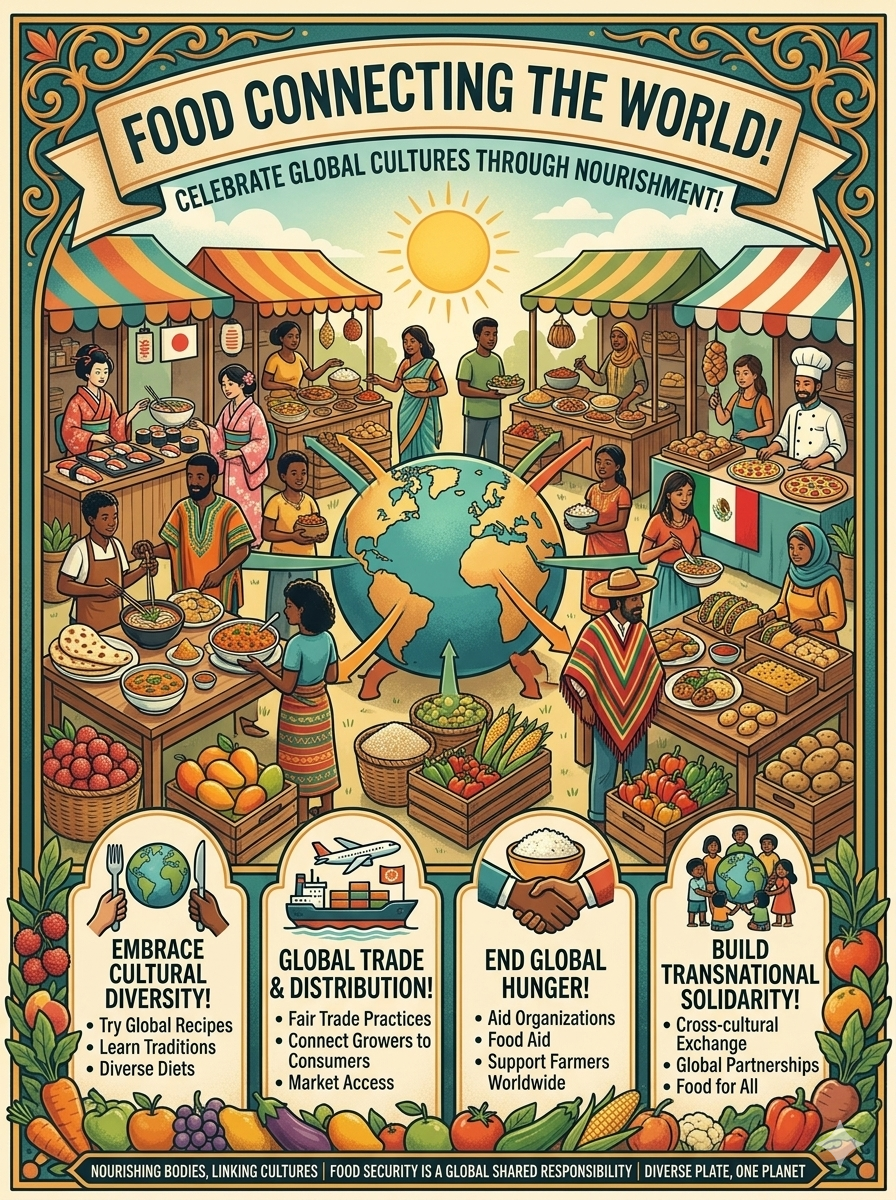
The Mosaic Palette: Documenting ancestral nutrition across cultures
What is this project about?
Students design and create a multimedia resource documenting their regional food system as a holistic health approach, including recipes, nutritional analysis, preparation methods, and cultural stories. They collaborate with their international partn...
- Age of Students
- 13-15 years
- Project Duration
- 4 weeks
- Starting Month
- August 2026
Learning Outcomes
Students will be able to identify and describe their regional traditional food systems, including ancestral recipes, nutritional purposes, and cultural significance within their communities.
Students will be able to demonstrate how traditional foods from their region serve specific physiological purposes by analyzing nutritional components and preparation methods used by their ancestors.
Students will be able to compare and contrast nutritional approaches and cultural food practices between their regional cuisine and those documented by international partner classrooms.
Students will be able to evaluate the effectiveness of traditional food systems in promoting personal health and cultural preservation while assessing their relevance to modern well-being challenges.
Students will be able to design and create a multimedia archive entry that combines recipes, nutritional analysis, cultural stories, and preparation methods, contributing to a shared global resource celebrating ancestral food wisdom with their international collaborators.
Skills to develop
Project Activities
Food Stories: Discovering Our Culinary Roots
Students share a meaningful dish from their family or community, exploring its origins, ingredients, and cultural significance. This warm-up builds connection within the class and introduces the idea that food carries history, nutrition, and identity.
Research and Document Your Regional Food System
Students research their region's traditional foods, selecting 2-3 key dishes to investigate deeply. They analyze nutritional components, preparation methods, and ancestral health purposes, then create detailed documentation (recipes, nutritional breakdowns, cultural stories) ready to share.
Exchange and Compare with Partner Class
Students review the food archives submitted by their international partner class, then create a comparative analysis highlighting similarities and differences in nutritional approaches, ingredients, and cultural practices. They provide peer feedback and identify common themes across regions.
Build and Refine the Shared Global Archive
Working in small groups, students integrate their regional documentation and partner feedback into a polished multimedia archive entry (combining recipes, nutritional analysis, cultural stories, and images). The class collectively organizes all entries into a searchable, visually engaging shared resource.
Showcase and Reflect on Food Heritage and Health
Students present their regional food system and key discoveries from the global archive to the class and partner school. They reflect on how ancestral food wisdom connects to personal health, cultural preservation, and global citizenship, and discuss how younger students might use this resource.