
Go back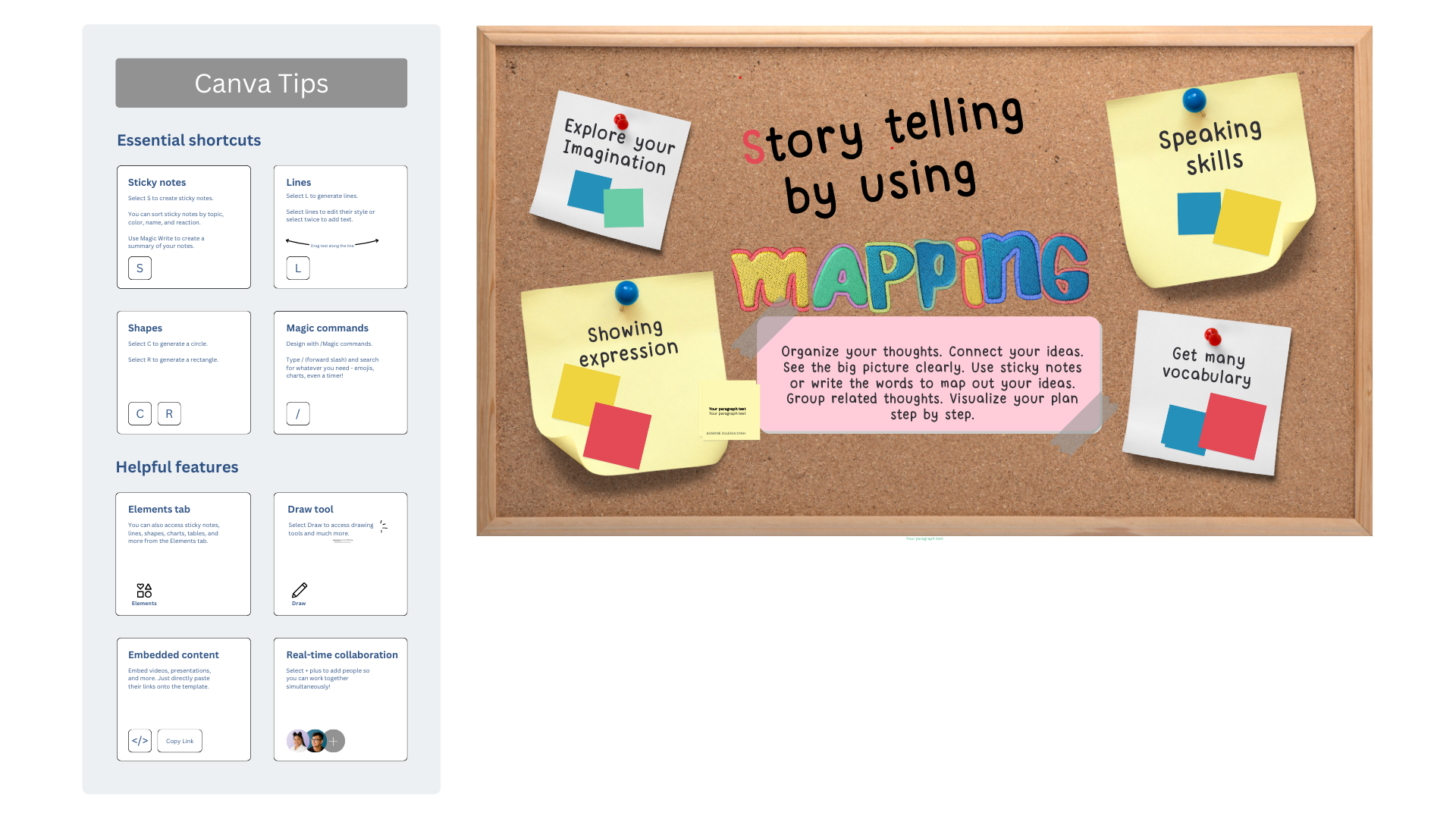
M
MRS. elsa Kenida elsa putri has created the project "Story Telling by using Semantic Mapping ......" in Class2Class.org
Request to joinActive
Public
Work with another class
Story Telling by using Semantic Mapping ......
What is this project about?
This is about how the students can express their english skills by telling the story with using a mapp as a tools to make the students easier to tell their story ,as a media that can help students describe their stories in sequence, and help students...
- Age of Students
- 9-12 years, 13-15 years, 16-18 years, 18+ years
- Project Duration
- 4 weeks
- Starting Month
- August 2026
This project contributes to the following global goals
Learning Outcomes
Storytelling using semantic mapping is one of the fun strategies or methods for teachers to explain or describe the material easily to students. Meanwhile, for students, telling stories using semantic mapping helps them more easily describe the storyline and elaborate words related to what they want to convey.
- improve students’ vocabulary
- improve students’ ability to use English
- increase students’ courage in storytelling
- increase students’ self-confidence in performing
- make students interested in learning English
- make students enjoy the learning process
- make students feel given opportunities and challenged to present their work
Evaluate
Project Timeline
1
Week 1
Presentation
Stages of Using Semantic Mapping in Storytelling
Stage 1: Introducing the Topic
The teacher introduces the topic or theme of the story to activate students’ prior knowledge.
Stage 2: Brainstorming Keywords
Students brainstorm words related to the topic, such as characters, setting, events, and important vocabulary.
Stage 3: Creating the Semantic Map
The teacher and students create a semantic map by placing the main topic in the center and connecting related words into categories.
Stage 4: Developing the Storyline
Students use the semantic map to arrange ideas into a clear and logical story sequence.
Stage 5: Practicing Storytelling
Students practice telling the story using the semantic map as a guide.
Stage 6: Storytelling Performance
Students present their stories in front of the class with more confidence.
Stage 7: Feedback and Reflection
The teacher gives feedback and reflects on students’ vocabulary, fluency, and confidence.