
Imdad Hussain has created the project "Our Water, Our Climate: Connecting Communities for Change" in Class2Class.org
Request to join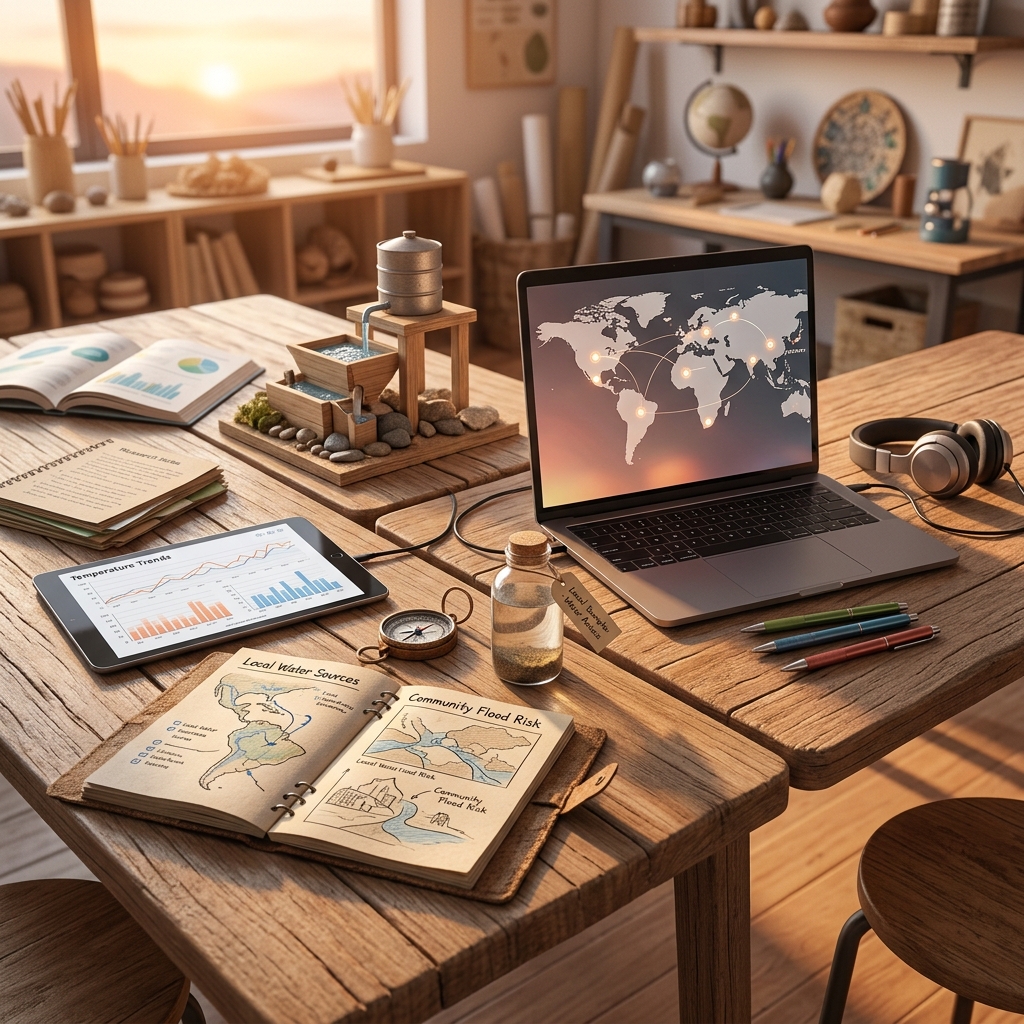
Our Water, Our Climate: Connecting Communities for Change
What is this project about?
Students research and document climate change impacts and water access challenges in their own communities, then share findings with partner classes globally to compare local environmental issues. They explore how these challenges differ across regio...
- Age of Students
- 9-12 years, 13-15 years, 16-18 years, 18+ years
- Project Duration
- 4 weeks
- Starting Month
- August 2026
Learning Outcomes
Students will be able to identify and describe climate change impacts and water access challenges in their local community and compare these findings with partner classrooms globally.
Students will be able to apply critical thinking to analyze how environmental issues differ across regions and collaborate with international peers to interpret diverse perspectives on sustainability solutions.
Skills to develop
Project Activities
Our Climate, Our Water: Getting Started
Students introduce themselves to the partner class and share initial thoughts about climate and water in their own communities. They watch a short video about global environmental challenges and discuss what they already know.
Local Research and Documentation
Students conduct interviews with community members, observe local water sources and environmental conditions, and document their findings with photos and notes. They organize data into charts and summaries to prepare for sharing with the partner class.
Comparing Our Worlds: Global Exchange Forum
Students review findings from the partner class and participate in an asynchronous forum where they ask questions, share observations, and discuss how climate and water challenges differ across regions. They practice respectful dialogue and perspective-taking with peers from another culture.
Analyzing Root Causes and Solutions
Working in small groups, students dig deeper into why environmental issues occur in different places and brainstorm practical solutions tailored to each region. They create a comparative analysis showing how local actions could address global challenges.
Planning Real Action in Our Community
Students design a concrete action plan for their school and neighborhood, such as a tree-planting initiative, water conservation campaign, or awareness event. They assign roles, set timelines, and prepare materials to carry out their plan.
Sharing Impact and Reflecting Together
Students present their research findings, solutions, and action outcomes to the partner class via slides or video. They reflect on what they learned about global interconnectedness, celebrate their local efforts, and discuss how their actions connect to the bigger picture of climate and water justice.