
Efosa Okan has created the project "From Trash to Treasure: Building Innovations Across Borders" in Class2Class.org
Request to join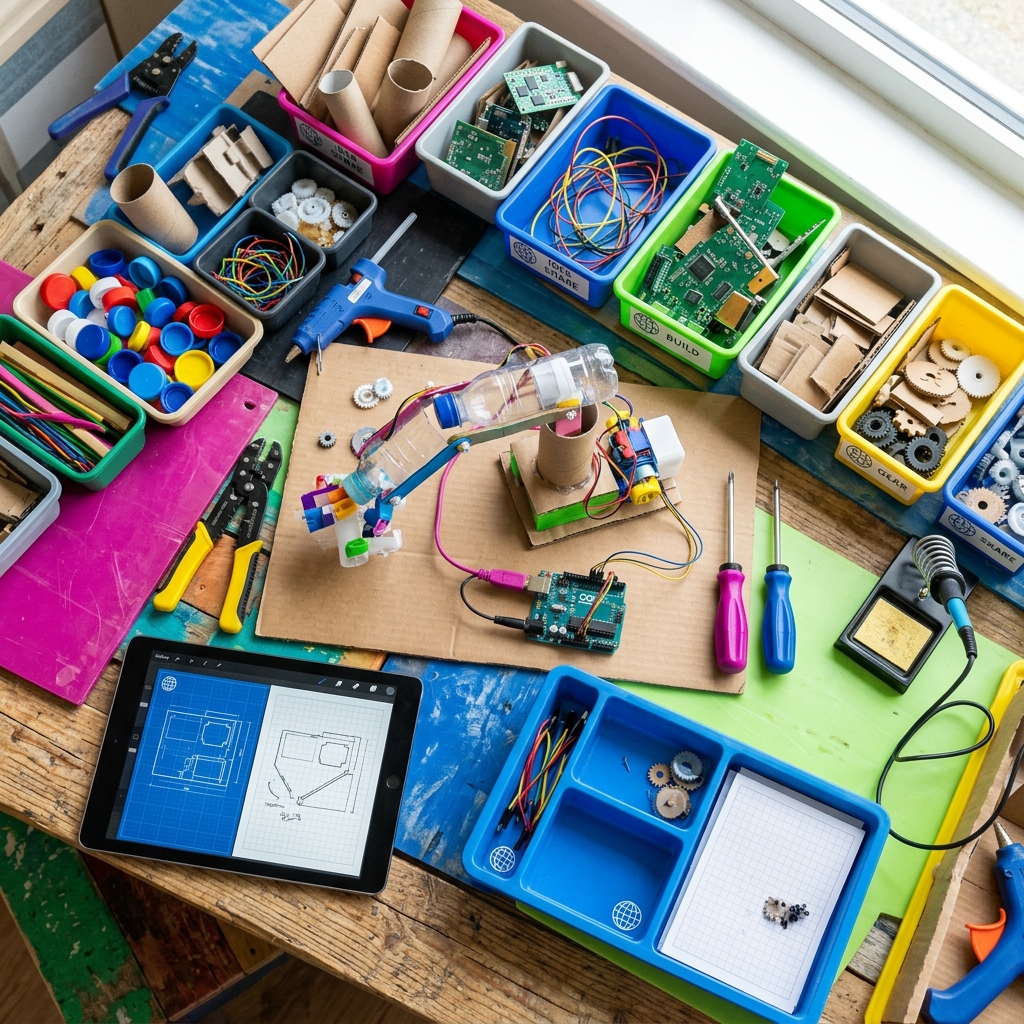
From Trash to Treasure: Building Innovations Across Borders
What is this project about?
Working in international teams, students design and prototype a functional STEAM product from collected waste materials, such as a water filter, storage container, art installation, or tool. They document their design process, test their prototype, a...
- Age of Students
- 13-15 years
- Project Duration
- 3 weeks
- Starting Month
- September 2026
Learning Outcomes
Students will be able to identify and describe waste materials in their local community and explain how they can be repurposed for innovative STEAM solutions.
Students will be able to apply critical thinking to demonstrate how collected waste materials can be transformed into functional prototypes that address real environmental or social challenges.
Students will be able to analyze and compare design solutions created by their international partner class, examining the different approaches to problem-solving and material use across cultural contexts.
Students will be able to evaluate the effectiveness and sustainability of their waste-based STEAM prototype by testing its functionality and assessing its impact on the identified community challenge.
Students will be able to design and build an innovative STEAM product from waste materials that collaboratively addresses a real-world need, integrating feedback from international teammates and documenting the iterative design process.
Skills to develop
Project Activities
Waste Walk and Challenge Definition
Students explore their local community to identify waste materials and environmental or social challenges they could address. They photograph examples, discuss what could be repurposed, and define the specific problem their team will tackle with their STEAM prototype.
Design, Build, and Test Your Prototype
Working in international teams, students brainstorm ideas, sketch designs, collect and sort waste materials, build their prototype, test its functionality, and document the entire process with photos and notes. Teams iterate based on testing results and prepare to share their creation.
Exchange and Compare Solutions with Partner Class
Teams share photos, videos, or descriptions of their prototypes with the partner class and review the partner team's design. Students analyze how different cultural contexts and available materials led to different solutions and provide constructive feedback on each other's approaches.
Showcase and Reflect on Impact
Each team presents their final prototype, explains the problem it solves, demonstrates how it works, and reflects on what they learned about sustainability, teamwork, and innovation. Students discuss how their solution could be improved or scaled in their community.