
Elias Davie has created the project "From Litter to fuel: Students Design Solutions for Cleaner Communities" in Class2Class.org
Request to join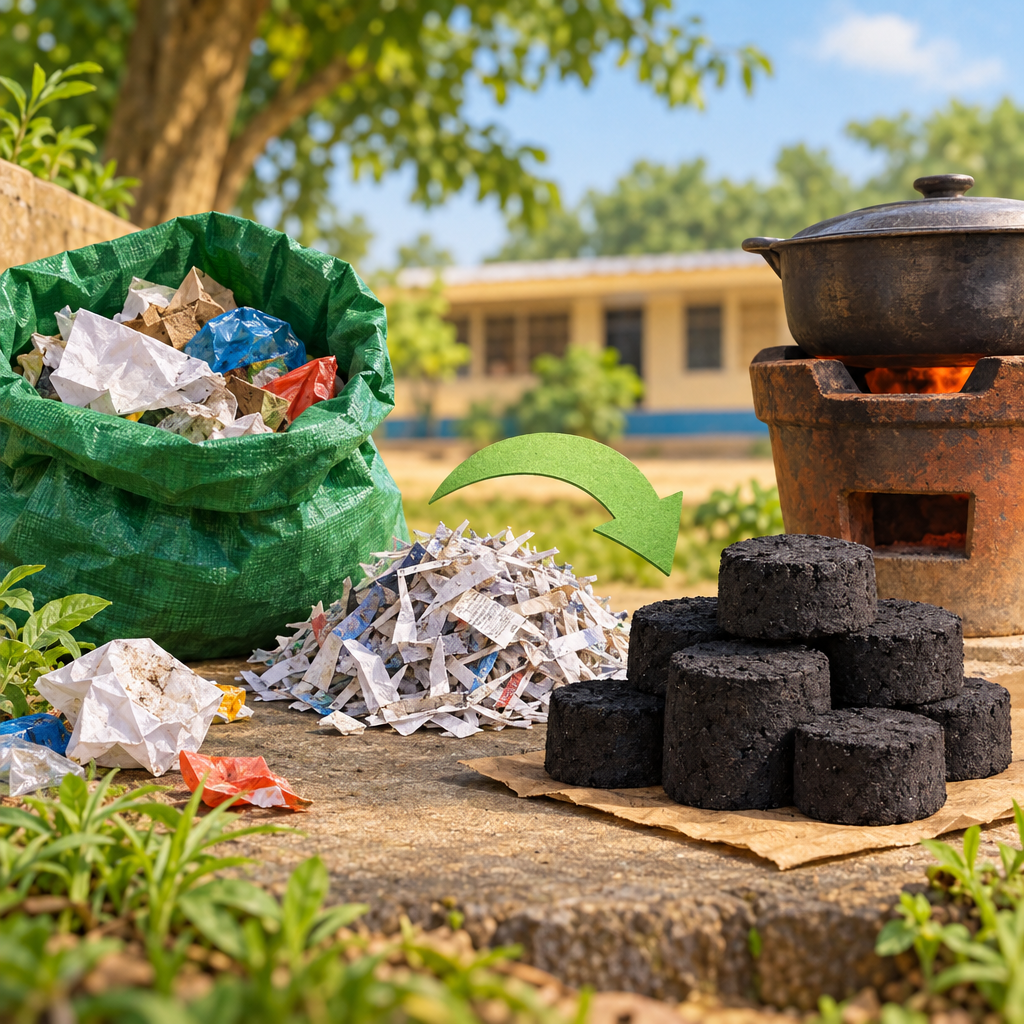
From Litter to fuel: Students Design Solutions for Cleaner Communities
What is this project about?
- Age of Students
- 9-12 years
- Project Duration
- 4 weeks
- Starting Month
- October 2026
Learning Outcomes
Skills to develop
Project Activities
Plastic Waste Challenge: Local Exploration and Global Connection
Students walk around their school grounds, photograph and document plastic waste they find, then discuss what they discover and why it matters. They learn how their local problem connects to global environmental challenges and meet their partner class through a short introductory video exchange.
Design Our Cleanup and Charcoal Plan
Students map out where plastic waste is found, design a collection schedule and storage system, and plan a charcoal production process using recycled paper. They sketch their ideas, test small batches of charcoal, and refine their approach based on what works.
Execute and Document the Cleanup Action
Students carry out their planned cleanup across the school, collect and sort plastic waste, and produce charcoal using their tested method. They photograph and record each step, noting what goes well and what they need to adjust.
Analyze Results and Compare with Partner Class
Students measure and evaluate how much waste they collected, assess the quality and quantity of charcoal produced, and review their partner class's cleanup and fuel solutions. They create a comparison chart showing similarities, differences, and what they learned from each other's approaches.
Create an Instructional Guide or Video for Global Replication
Students design a clear, step-by-step guide or short instructional video showing how other communities can replicate their cleanup and charcoal production process. They include tips, materials needed, safety notes, and explain why this solution matters for the environment.
Share, Reflect, and Celebrate Impact
Students present their complete cleanup and charcoal solution to their school community and partner class, share their instructional guide, and reflect on what they learned about problem-solving, teamwork, and environmental responsibility. They discuss how their work could inspire others to take action.