
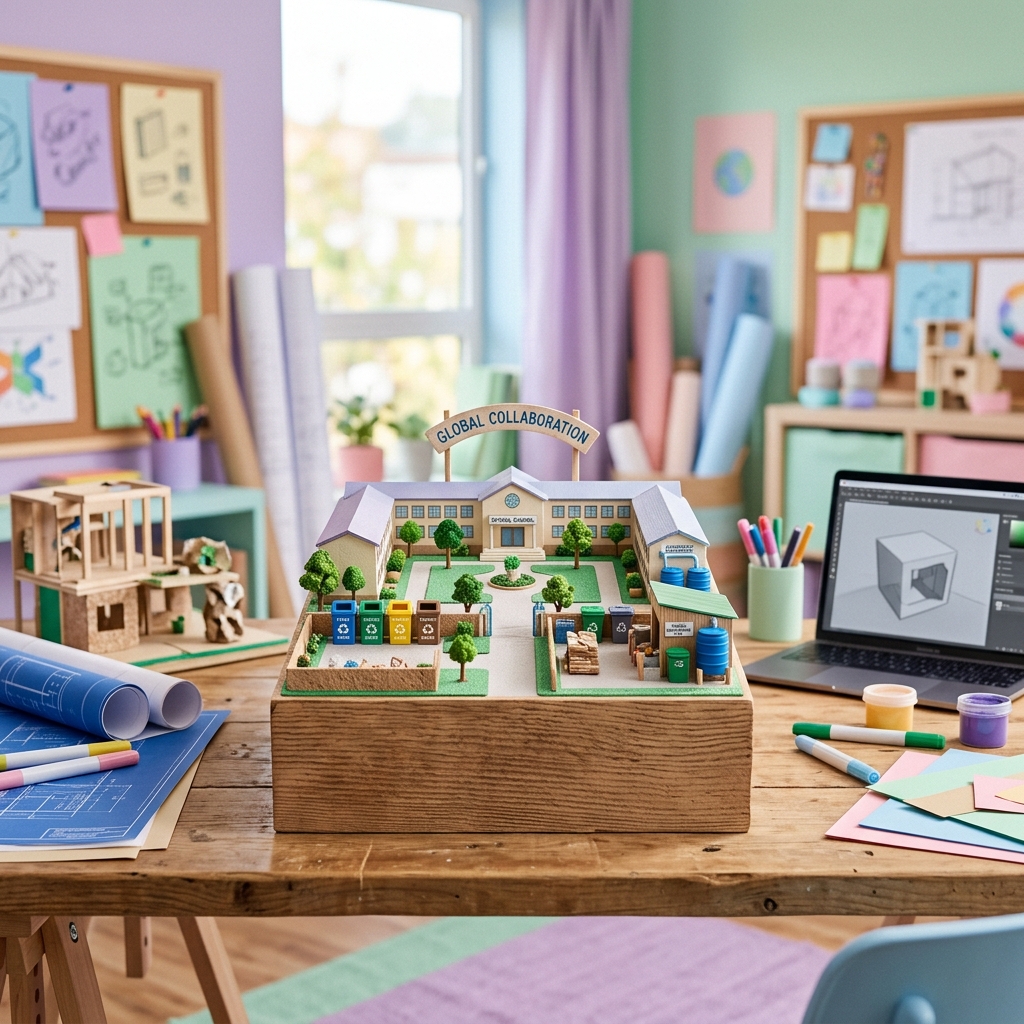
Campus Sanitation
What is this project about?
Students investigate their school Campus. current waste disposal system by interviewing staff, reviewing disposal records, and observing daily practices, then analyze what works well and where problems occur. They present their findings to a partner ...
- Age of Students
- 13-15 years
- Project Duration
- 3 weeks
- Starting Month
- September 2026
This project contributes to the following global goals
This project promotes and protects these children's rights
Learning Outcomes
Students will be able to identify and describe waste generation patterns on their school campus and compare sanitation challenges with partner classrooms globally to recognize cultural and contextual differences.
Students will be able to demonstrate critical thinking by analyzing waste disposal practices across schools and collaborating with international peers to propose culturally-informed solutions for improving campus sanitation.
Skills to develop
Project Activities
Waste Detectives: Understanding Our Campus System
Students explore their school's waste disposal system by interviewing staff, observing disposal practices in different areas, and reviewing records. They document what they find in notes and sketches to understand how waste is currently managed.
Classifying and Analyzing Waste Patterns
Students collect and sort samples of actual school waste into recyclable, organic, and non-recyclable categories, then analyze patterns in what is generated daily. They create a simple visual record (chart or diagram) showing waste types and quantities to identify problems and successes in the current system.
Research and Prepare for Global Exchange
Students research environmental and health consequences of improper waste disposal, then prepare a short presentation of their campus findings and questions for the partner class. They organize their data and key observations into a clear format ready to share.
Live Video Exchange with Partner Class
Students present their waste analysis findings to the international partner class via video call, share observations about their campus sanitation challenges, and listen to the partner class's findings. Both classes ask questions and discuss cultural and contextual differences in how they handle waste.
Reflect and Propose Solutions
Students review feedback from the partner class and reflect on what they learned about global waste challenges. They work together to propose at least three practical, culturally-informed solutions for improving their own campus sanitation and present their action plan to the school community.